Choline pregnancy brain development is one of the most overlooked topics in preconception planning. Most women hear plenty about folate and DHA but very little about this equally essential nutrient.
If you have been diligently taking your prenatal vitamin and eating well, you may still feel a quiet worry that you are missing something. That feeling is worth listening to. Nutrient gaps in the weeks before conception and in the first trimester can have lasting effects on a child’s development, and choline is one of the most frequently overlooked pieces of that puzzle. Research published in the journal Nutrients has highlighted that inadequate maternal choline intake is associated with increased neural tube defect risk and impaired hippocampal growth, the brain region central to learning and memory and the focal point of most choline pregnancy brain development research.
The gap often comes down to a combination of factors: choline is not always included in standard prenatal vitamins, dietary sources such as egg yolks and liver can be avoided during pregnancy due to food safety concerns or personal preference, and public health messaging has historically focused on folate above all else. Women following vegan or vegetarian diets face an additional challenge, since the richest food sources of choline are largely animal-derived.
In this article you will learn how choline pregnancy brain development works before and during pregnancy, how to assess whether you are getting enough, which foods and supplements can close the gap reliably, and how to talk with your provider about personalizing your preconception nutrition plan.
Choline Pregnancy Brain Development: Why This Nutrient Is Essential
Choline is a water-soluble nutrient classified alongside the B vitamins, though it is technically in a category of its own. It serves as a building block for phosphatidylcholine, a phospholipid that forms every cell membrane in the body, including those of your developing baby’s rapidly dividing brain cells. It is also the precursor to acetylcholine, a neurotransmitter that governs memory, attention, and muscle control.
During early fetal development, choline is drawn upon heavily for two interconnected processes. First, it supports neural tube closure in the earliest weeks of pregnancy, a window that overlaps significantly with the preconception period since many women do not realize they are pregnant until after this critical stage has passed. Second, it drives the division of progenitor cells in the hippocampus, the brain structure most responsible for long-term memory formation.
A landmark clinical trial from Cornell University, published in the FASEB Journal, found that higher maternal choline intake during the third trimester was associated with faster information processing in infants at seven and thirteen months of age. While that particular study focused on later pregnancy, earlier research points to the preconception window as equally important because choline stores in the body must be adequate before demand spikes in the first trimester.
Choline also works closely with folate in a shared biochemical pathway called one-carbon metabolism. When folate is low, the body relies more heavily on choline to complete the same methylation reactions that regulate gene expression and close the neural tube. This means that even women who take adequate folate may be placing extra pressure on their choline reserves without realizing it. You can read more about the relationship between these nutrients in our guide on folate versus folic acid when trying to conceive.
- Start thinking about choline at least three months before you plan to conceive, not just after a positive test.
- Prioritize whole-food sources such as eggs, which provide choline in a highly bioavailable form.
- Recognize that your choline needs interact with your folate and B12 status, so these nutrients are best optimized together.
- Ask your prenatal vitamin manufacturer specifically how much choline their formula contains, as many provide little or none.
- Work with your healthcare provider to assess your dietary intake before adding a standalone choline supplement.
How Much Choline Do You Need Before and During Pregnancy
Current guidance from the National Academy of Medicine sets the adequate intake for choline at a specific amount for pregnant women that is notably higher than for non-pregnant adults, and higher still during breastfeeding.
What is clear from the published literature is that most women, regardless of dietary pattern, consume considerably less choline than is recommended. A 2022 analysis in the American Journal of Clinical Nutrition found that fewer than ten percent of pregnant women in the United States met the adequate intake for choline from diet alone, with even lower rates among women following plant-based eating patterns.
Eggs are the most practical and affordable dietary source, providing meaningful amounts of choline primarily concentrated in the yolk. Beef liver is arguably the most concentrated single food source but is typically limited in pregnancy due to vitamin A concerns. Other useful sources include salmon, chicken breast, shiitake mushrooms, and soybeans. For women who eat eggs regularly, two to three whole eggs per day can contribute substantially to choline goals, though diet alone rarely closes the gap entirely for pregnant women.
This is where supplementation becomes a practical and evidence-supported strategy. Not all prenatal vitamins include choline, and those that do vary considerably in the amount provided. When evaluating a prenatal supplement, look beyond the headline nutrients and check the full label. Our overview of the best choline supplements covers specific product comparisons to help you choose wisely.
- Read the full supplement facts panel of your prenatal vitamin to confirm whether choline is included.
- Choose whole eggs over egg whites, as virtually all choline is concentrated in the yolk.
- If you follow a vegan or vegetarian diet, speak to your provider early about a standalone choline supplement.
- Consider keeping a three-day food diary to estimate your current choline intake before your preconception appointment.
- Do not assume that a high-quality prenatal vitamin automatically provides adequate choline. Many do not.
Choosing the Right Supplement: What to Look for on the Label
The supplement market can be genuinely confusing, and choline is a good example of why label literacy matters. Choline is available in several forms, including choline bitartrate, CDP-choline (citicoline), and phosphatidylcholine, each with different bioavailability profiles and price points. Choline bitartrate is the most commonly found form in prenatal vitamins and standalone supplements and is well-studied for supporting adequate choline status during pregnancy. Phosphatidylcholine, which is derived from lecithin, mimics the form found naturally in food and may be particularly well-tolerated digestively.
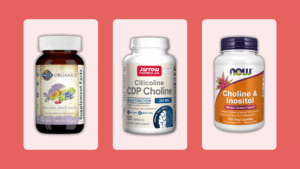
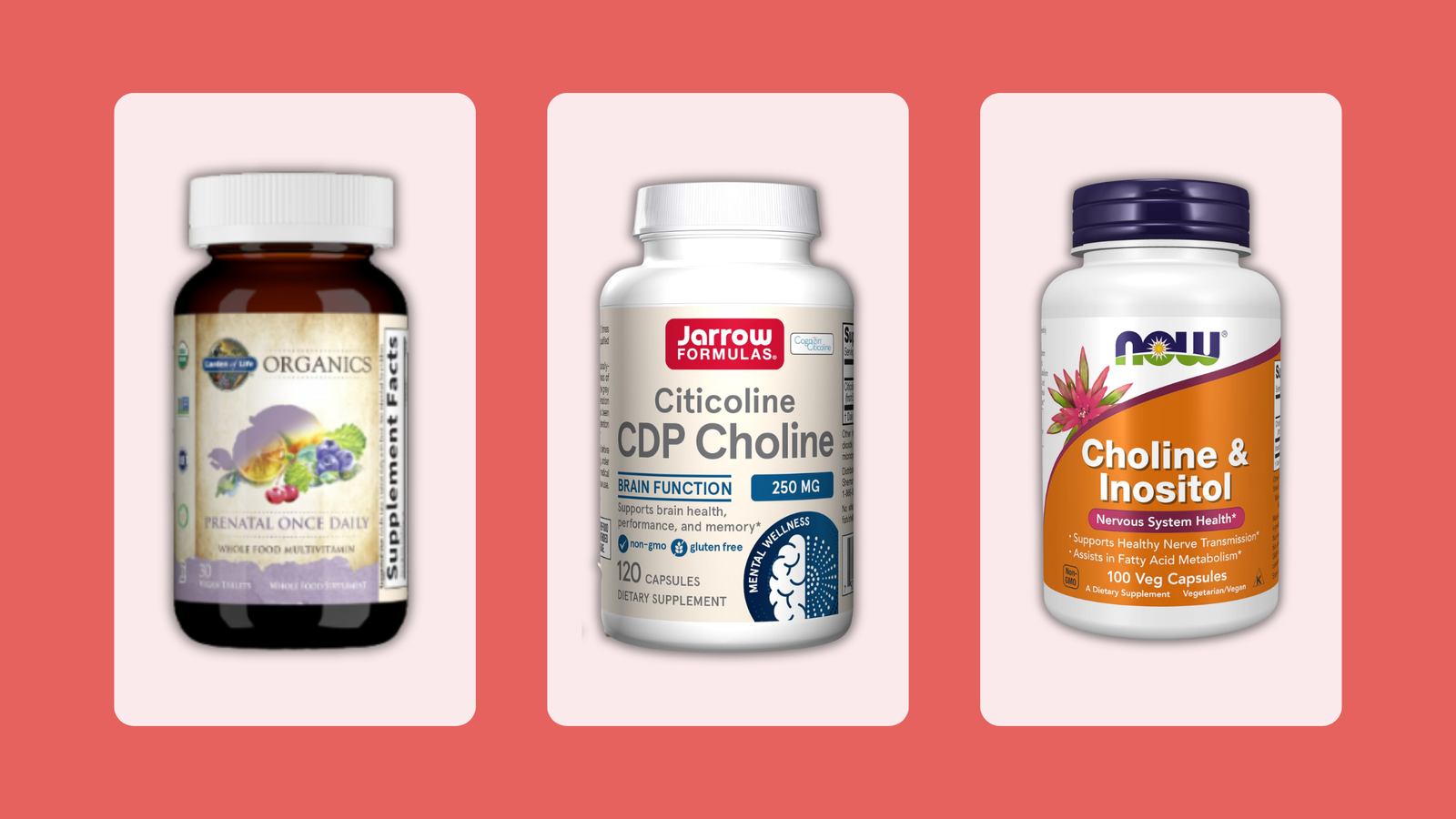
Several well-regarded prenatal vitamin brands have recognized the choline gap and reformulated accordingly. Thorne Basic Prenatal is one option that provides choline alongside methylated B vitamins, making it a practical choice for women who also want to address the folate-choline interaction discussed earlier. Seeking Health Optimal Prenatal is another formula that includes choline bitartrate and is often recommended by functional medicine practitioners for preconception support. For women who prefer a food-based approach to supplementation, Garden of Life Mykind Organics Prenatal is a certified organic option, though as with any product, the choline content should be confirmed on the current label since formulations can change.
If your current prenatal does not contain adequate choline, adding a standalone supplement such as NOW Foods Choline and Inositol or Jarrow Formulas Citicoline can be a straightforward solution, though CDP-choline formulations are more often studied for cognitive support in adults than specifically in prenatal contexts. Your pharmacist can help you determine whether adding a standalone product creates any overlap or concern with your existing prenatal formula.
When choosing any prenatal supplement, third-party certification from organizations such as NSF International or USP provides an additional layer of quality assurance, particularly important during pregnancy when purity matters most. You may also find it helpful to review our broader guide on the best prenatal vitamins for a side-by-side comparison of leading formulas.
Choline Pregnancy Brain Development Beyond the First Trimester
One of the most important and underappreciated facts about choline is that demand does not taper off after the neural tube closes in early pregnancy. If anything, the second and third trimesters place even greater demands on maternal choline stores as the fetal brain undergoes its most rapid phase of growth, the hippocampus expands significantly, and the liver begins producing phospholipids at scale to support cell membrane formation throughout the body.
The placenta actively concentrates choline from maternal blood and delivers it to the fetus at levels well above those found in maternal circulation, a process that reflects how nutritionally prioritized this nutrient is for fetal development. This means that even when a mother’s dietary intake is borderline, her body will continue to channel available choline toward the baby, potentially leaving her own reserves depleted.
Breastfeeding continues this high-demand period. Human breast milk is naturally rich in choline, and the concentrations found in milk reflect maternal intake, meaning that what you eat and supplement after delivery directly influences how much choline your baby receives through feeding. Women who breastfeed have even higher recommended choline intake than those who are pregnant, making the postpartum period another critical window for nutritional attention.
There is also emerging evidence, though still in early stages, suggesting that adequate maternal choline intake may have benefits beyond the newborn period, potentially influencing a child’s stress response and risk of certain attention-related challenges later in childhood. While these findings require larger confirmatory trials before firm conclusions can be drawn, they add to the compelling case for treating choline as a lifelong investment in your child’s neurological foundation rather than a short-term pregnancy checkbox.
If you are also preparing your body holistically before conception, our article on how to prepare your body for pregnancy in three months offers a practical framework for the broader preconception window.
Frequently Asked Questions
Can I get enough choline from food alone during pregnancy?
It is possible but difficult for most women. Eggs and liver are the richest sources, but few people eat them in the quantities needed to meet pregnancy targets daily. Most nutrition experts recommend confirming dietary intake first and supplementing any remaining gap with a choline-containing prenatal or standalone product.
Is choline safe to take throughout pregnancy and while breastfeeding?
Yes, choline is considered safe and well-tolerated at recommended intake levels during pregnancy and breastfeeding. Very high supplemental doses may cause a fishy body odor or mild gastrointestinal discomfort in some people. Always discuss dosing with your healthcare provider or pharmacist before adding a new supplement.
Does my prenatal vitamin already contain choline?
Many standard prenatal vitamins contain little or no choline, so you cannot assume it is covered. Read the supplement facts panel carefully and look for choline listed as a separate ingredient with a stated amount. If it is absent or very low, discuss adding a standalone choline supplement with your provider.
How does choline interact with folate during pregnancy?
Choline and folate share the one-carbon metabolic pathway, meaning they can partially compensate for each other. When folate intake is low, the body draws more heavily on choline to complete critical methylation reactions. Optimizing both nutrients together is more effective than focusing on either one alone.
When should I start taking a choline supplement if I am planning a pregnancy?
Ideally, begin building your choline status at least three months before you start trying to conceive. This mirrors general preconception guidance for other key nutrients and ensures your stores are robust before the earliest and most sensitive window of fetal neural development begins.
A Word From Vitamins For Woman
Choline may not yet have the name recognition of folate or DHA, but the science supporting its role in fetal brain development is substantial and growing. At Vitamins For Woman, we believe that every woman deserves access to accurate, evidence-based information so she can make empowered choices for herself and her growing family.
References
- Caudill M et al. (2018). Maternal choline supplementation during the third trimester of pregnancy improves infant information processing speed. FASEB Journal. PMID: 29217669. PubMed
- Zeisel SH et al. (2006). Choline: an essential nutrient for public health. Nutrition Reviews. PMID: 17828671. PubMed
- Wallace TC et al. (2018). Usual choline intakes are associated with egg and protein food consumption in the United States. Nutrients. PMID: 29382143. PubMed
- Shaw GM et al. (2004). Periconceptional dietary intake of choline and betaine and neural tube defects in offspring. American Journal of Epidemiology. PMID: 15234930. PubMed
- Jiang X et al. (2012). Maternal choline intake alters the epigenetic state of fetal cortisol-regulating genes in humans. FASEB Journal. PMID: 22362896. PubMed