If you have spent any time in fertility or PMOS communities online, myo-inositol has almost certainly crossed your timeline. It is one of the most recommended supplements by reproductive endocrinologists for women with PMOS, one of the most researched inositol compounds for cycle health, and one of the few supplements with genuine clinical evidence showing it can improve ovulation rates and metabolic markers. But walk into any health store or search Amazon and you will find dozens of options — different myo-to-D-chiro ratios, different delivery methods, wildly different prices — with confusing marketing claims and almost no clarity on what actually works.
This post cuts through all of that. We reviewed seven of the best myo-inositol supplements for fertility based on form, dosage, ratio, absorption, quality, and value — so you can make an informed decision without spending hours comparing labels or falling for marketing hype.
What Is Myo-Inositol and Why Does It Matter for Fertility?
Myo-inositol is a naturally occurring compound (a type of sugar alcohol) found in virtually all cells in your body. It plays a critical role in insulin signalling — essentially, it helps your cells respond properly to insulin and maintain healthy blood sugar and hormone levels.
This matters for fertility because insulin resistance and hormonal imbalance are at the root of many reproductive issues. When your cells don’t respond well to insulin, your body produces more and more of it to compensate. High insulin levels then trigger your ovaries to produce excess androgens (male hormones), which disrupts ovulation, thickens follicle walls, and prevents eggs from maturing properly.
Myo-inositol directly improves insulin sensitivity. Multiple large-scale clinical trials have shown that supplementing with myo-inositol improves ovulation rates, increases pregnancy rates, and lowers androgens — particularly in women with PMOS. A landmark study published in Reproductive BioMedicine Online found that women with PMOS who took myo-inositol had a 40% higher ovulation rate and significantly more regular cycles than those who did not. The effect is especially pronounced in women with insulin resistance, but benefits extend across the fertility spectrum.
Unlike many fertility supplements, myo-inositol works. It is not a nice-to-have — it is a fundamental intervention for PMOS-related infertility.
Top 3 Myo-Inositol Supplements for PMOS & Fertility
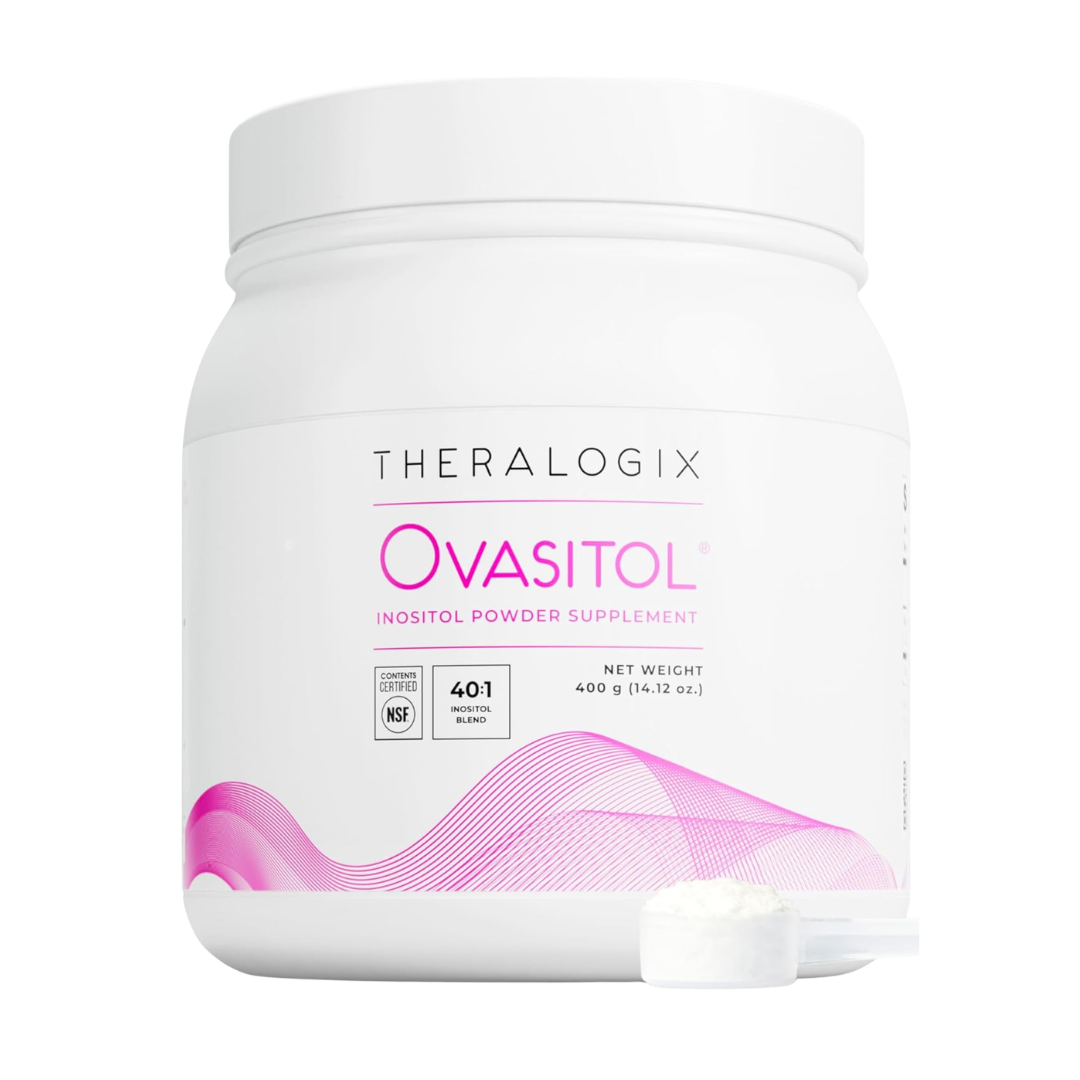
- Gold-standard 40:1 myo-to-D-chiro ratio backed by latest research
- Mixes easily in water, minimal taste
- Specifically formulated for PMOS and fertility protocols
- Highest price point on this list
- Only 30 servings per jar (monthly supply), frequent repurchasing
Theralogix Ovasitol is the gold standard for a reason. It is the same formulation used in most PMOS fertility research, delivered at the exact doses proven to improve ovulation and cycle regularity. For women with PMOS who want evidence-backed, zero-compromise supplementation, this is the top choice. The 40:1 ratio, pharmaceutical-grade purity, and clinical validation justify the premium price if budget allows.
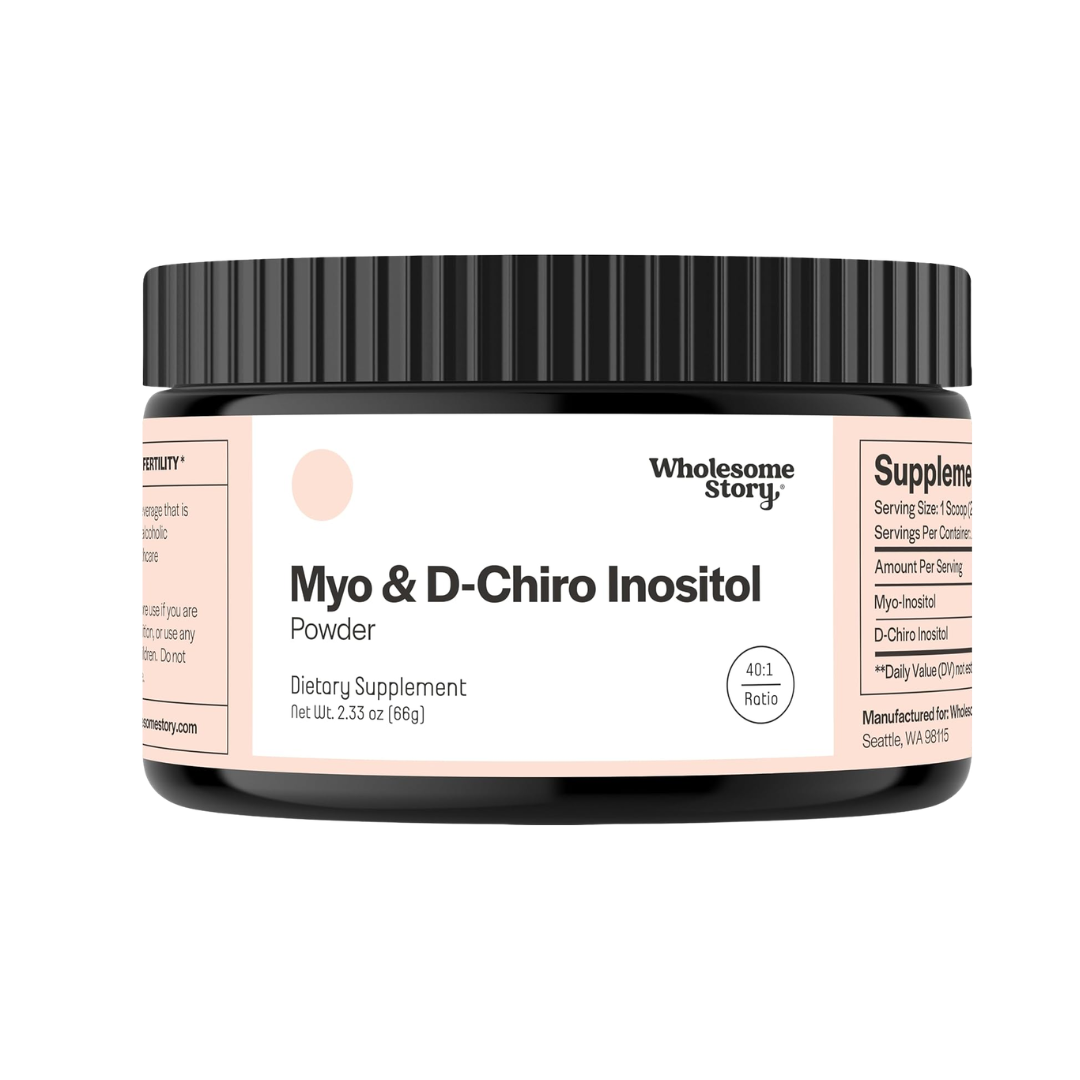
- Delivers 2g myo-inositol per serving at half the price of branded options
- Flexible dosing — can easily make 40:1 by adding D-chiro separately if desired
- Specifically formulated for PMOS and fertility protocols
- Pure myo-inositol only (no built-in D-chiro ratio)
- Slightly chalky texture compared to premixed formulas
For women who understand the science and are comfortable with flexibility, Wholesome Wellness delivers clinical-grade myo-inositol at a genuinely affordable price. You get the same active ingredient as premium brands for significantly less. If you want the 40:1 ratio, you can purchase D-chiro separately and mix it in — still cheaper than Ovasitol.
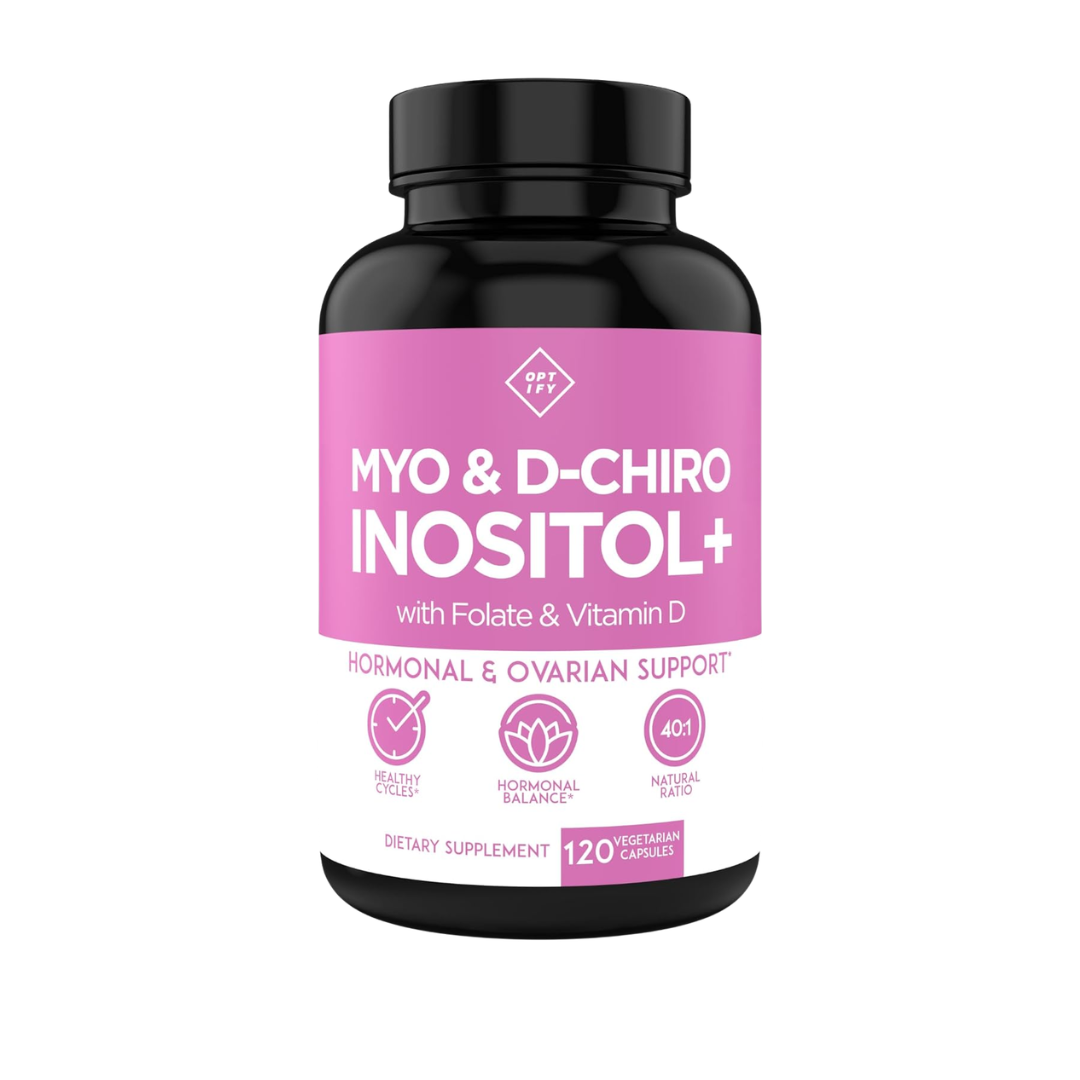
- Zero mixing or measuring required
- Affordable entry point for new supplementers
- No taste — swallow and go
- Cost per gram is higher than powder equivalents
- Capsules may be less well-absorbed than powder
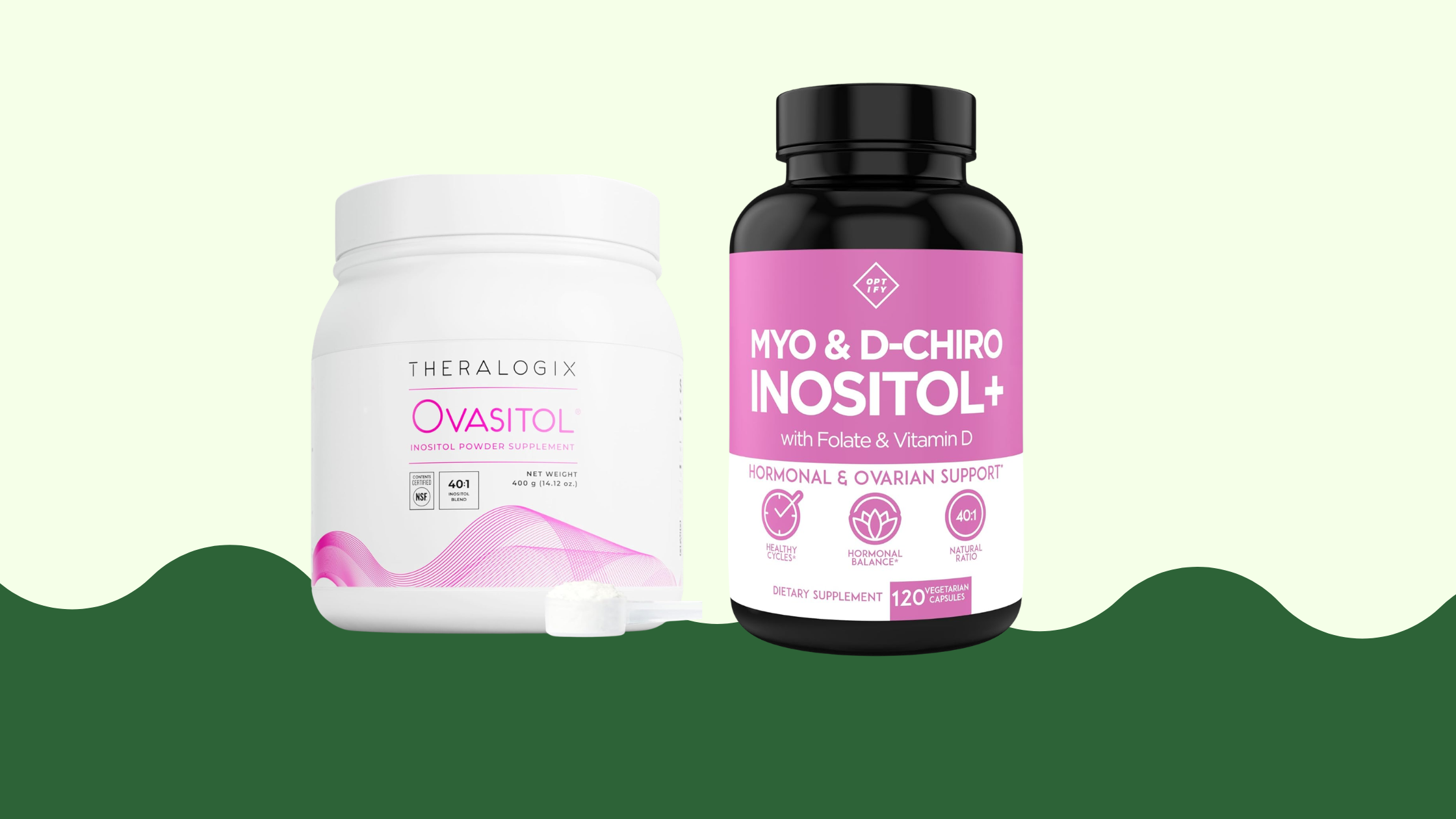
Optify Myo-Inositol & D-Chiro Inositol is ideal for women who hate measuring powder or mixing supplements, or who are just beginning to explore myo-inositol and want a low-commitment entry point. The trade-off is pill burden and cost per dose, but for convenience and accessibility, it is unbeatable.
What to Look for in a Myo-Inositol Supplement for Fertility
Not all myo-inositol supplements are created equal. Here is what actually matters when choosing one for fertility:
Form — Powder vs Capsule: Powder allows you to adjust dosage more flexibly and is generally more absorbable than capsules (which rely on your digestive system breaking them down first). Powders also tend to offer better value at higher doses. Capsules are convenient if you travel or dislike the taste of powder, but you are paying for convenience.
Myo to D-Chiro-Inositol Ratio: This is where most confusion lives. Recent research suggests a 40:1 ratio of myo to D-chiro-inositol matches the natural ratio in human follicular fluid and may be optimal. However, many products use a 2:1 ratio based on older studies. The truth: 40:1 is supported by more recent evidence, but even a 2:1 product with adequate myo-inositol dosage will work. Do not let ratio marketing overshadow total dosage.
Dosage: Most fertility research uses 2–4 grams of myo-inositol per day, split into two doses. A 500mg capsule requires taking 4–8 capsules daily, which is inconvenient and expensive. Look for products that deliver at least 2 grams of myo-inositol per serving (ideally in powder form) to keep daily pill burden manageable.
Third-Party Testing: The supplement industry is largely unregulated. Look for products tested by independent third parties like USP, NSF International, or ConsumerLab. This verifies the product contains what the label says and is free from contaminants or heavy metals.
Fillers and Additives: Avoid unnecessary fillers, artificial sweeteners (especially sucralose or aspartame), and allergens. Some products use inulin or other prebiotics as fillers — not harmful, but it adds cost without benefit. Clean labels matter when you are TTC.
Stability and Storage: Myo-inositol is hygroscopic (it absorbs moisture), which is why powders can clump in humid climates. Products in sealed jars with desiccant packets store better than loose powders in paper bags. If a product arrives clumpy, it has already been exposed to moisture and may have lost potency.
Price Per Dose — Not Price Per Bottle: A bottle of 120 capsules at 500mg each costs less upfront than a jar of powder with 120 servings at 4 grams. However the capsule bottle is a month’s supply while the powder is a month’s supply at half the actual dose used in research. Always calculate cost per gram of myo-inositol, not cost per unit.
How Long Does Myo-Inositol Take to Work?
Myo-inositol works faster than many fertility supplements, but patience is still required. Most research shows meaningful improvements in insulin sensitivity and cycle regularity within 8–12 weeks of consistent supplementation. However, ovulation and fertility outcomes typically show improvement after 3–6 months.
If you have PMOS with irregular cycles, you may notice cycle regulation (more predictable periods) within 2–3 months. If you are supplementing for general metabolic health or egg quality, the full benefit takes longer — particularly because it takes approximately 90 days for an egg to mature, so myo-inositol needs time to improve the metabolic environment in which eggs develop.
Standard dosing is 2–4 grams per day, split into two doses with meals. Some protocols for women with severe insulin resistance or high androgens use doses as high as 4–6 grams per day, but this should only be done under medical supervision.
Myo-Inositol Dosage Guide for Fertility & PMOS
Getting the dose right is one of the most important parts of supplementing with myo-inositol. Most research supporting fertility benefits has used 2–4 grams per day.
General guidelines by situation:
PMOS with irregular cycles: 2–4 grams per day, split into two doses. Start at 2 grams and increase to 4 grams if cycles don’t regulate within 3 months. The higher dose is better for women with more pronounced insulin resistance.
PMOS with infertility (TTC for 6+ months): 3–4 grams per day. This is the range most commonly used in fertility studies for PMOS-related infertility.
General TTC without PMOS but with insulin resistance or metabolic concerns: 2–3 grams per day. Even without PMOS, improved insulin sensitivity supports better ovulation and egg quality.
Normal metabolic health, general fertility support: 2 grams per day may be sufficient, though research typically uses 2–4 grams. More is not necessarily better — the dose used in the landmark studies is 2–4 grams.
IVF prep with PMOS: 4 grams per day, started at least two months before egg retrieval. This allows time for improved egg quality and metabolic environment.
Timing: Myo-inositol is best absorbed with food. Splitting the dose across two meals (morning and evening, ideally with carbohydrates to enhance absorption) improves uptake compared to taking it all at once.
How long before TTC to start: A minimum of 2–3 months if you have PMOS and need to regulate cycles. If you are simply supporting general metabolic health for fertility, 3 months is reasonable. The longer you supplement before conception, the more your metabolic environment improves.
Myo-Inositol vs D-Chiro-Inositol — And the Ratio Debate
The short version: myo-inositol is the form that does most of the work in your tissues. D-chiro-inositol is a metabolite that myo-inositol converts into, and it plays a supporting role in insulin signalling.
For years, products were marketed with a simple 2:1 myo-to-D-chiro ratio. But recent research (particularly a 2020 study in Reproductive Sciences) found that the natural ratio in human follicular fluid is closer to 40:1. Products formulated at 40:1 now dominate the market and are considered more physiologically aligned — meaning they match what your body naturally produces.
However, here is the honest truth: even a 2:1 product with a solid myo-inositol dose will work. The difference between 2:1 and 40:1 is modest compared to the difference between taking myo-inositol and not taking it. Do not let ratio marketing distract you from the more important factors: total myo-inositol dose, form, and third-party testing.
If you are choosing between two products and one has a 40:1 ratio with the same dose and price as a 2:1 product, choose the 40:1. But do not overpay for a 40:1 ratio if a cheaper 2:1 option has a higher myo-inositol dose.
Frequently Asked Questions
Can myo-inositol improve egg quality?
Yes. By improving insulin sensitivity and reducing androgens, myo-inositol creates a better metabolic environment for egg development. The effect is most pronounced in women with PMOS, but benefits extend to all women struggling with metabolic or hormonal imbalances.
Is myo-inositol safe to take while trying to conceive?
Yes, myo-inositol is considered safe for most people at therapeutic doses. It is a naturally occurring compound found in foods (citrus fruits, legumes, nuts). There is no evidence of harm at doses up to 4 grams per day, and some protocols use higher doses under medical supervision.
Should I take myo-inositol if I don’t have PMOS?
If you have regular cycles, normal androgens, and good insulin sensitivity, myo-inositol is less critical — but it still supports metabolic health. If you have any metabolic markers suggesting insulin resistance (weight gain despite diet, skin tags, dark patches of skin), myo-inositol is worth considering.
How do I know if myo-inositol is working?
In PMOS, look for more regular cycles, reduced androgens (if tested), reduced excess hair growth, and clearer skin within 2–3 months. For general fertility, improved insulin markers and better energy levels are early signs. Ovulation tracking (via basal body temperature or ovulation tests) can confirm improved ovulation within 2–3 months.
Do I need to take myo-inositol throughout pregnancy?
Research on myo-inositol in pregnancy is limited. Most guidance is to continue through the first trimester and then discuss with your doctor. Some practitioners recommend continuing throughout pregnancy, especially for women with PMOS, but this should be personalised medical advice.
A Word From Vitamins For Woman
Myo-inositol is one of the most evidence-backed supplements available for PMOS-related infertility and one of the few that reproductive endocrinologists actively recommend and prescribe. If you have PMOS, irregular cycles, or metabolic markers suggesting insulin resistance, myo-inositol should be near the top of your supplement list — not as an afterthought.
The key is choosing the right dose (2–4 grams of myo-inositol per day), preferably in powder form for convenience and cost, with third-party testing to verify quality. Whether you choose a 40:1 ratio product or a pure myo-inositol powder, consistency matters far more than ratio perfection.
References
Unfer, V., Carlomagno, G., Dante, G., & Facchinetti, F. (2012). Inositol supplementation in women with polycystic ovary syndrome (PMOS): A systematic review of randomised controlled trials. Fertility and Sterility, 98(1), 1619–1631.
Genazzani, A. D., Lanzoni, C., Ricchieri, F., & Jasonni, V. M. (2008). Myo-inositol administration positively effects hyperinsulinemia and hormonal parameters in ovulatory infertile women with polycystic ovaries. Gynecological Endocrinology, 24(3), 139–144.
Papaleo, E., Unfer, V., Baillargeaux, A., De Santis, L., Fusi, F., & Ferrari, A. (2009). Myo-inositol may improve oocyte quality in intracytoplasmic sperm injection cycles. A prospective, randomized, placebo-controlled study. Fertility and Sterility, 91(5), 1750–1754.
Izzo, C. R., Chiossi, G., & Facchinetti, F. (2011). Myoinositol supplementation in polycystic ovary syndrome patients reduces the appearance of gestational diabetes of pregnancy. Experimental and Clinical Endocrinology & Diabetes, 119(2), 75–79.
Morgante, G., Massaro, M. G., Di Sabatino, A., Musacchio, M. C., & De Leo, V. (2011). Therapeutic approach for polycystic ovary syndrome. Reproductive Biomedicine Online, 23(6), 764–773.