
You have made the decision to try for a baby, taken your last pill, and now you are waiting — and wondering. For many women, the weeks after stopping hormonal birth control bring unexpected changes: irregular cycles, mood shifts, and a nagging sense that something is “off.” This experience is far more common than you might think, and it has a name: post-pill syndrome. Understanding what is happening in your body is the first empowering step toward supporting your fertility naturally.
Hormonal contraceptives, including the combined pill, progestogen-only pill, and the hormonal IUD, work by suppressing ovulation and altering hormone feedback loops. Research published in Nutrients has confirmed that long-term use of oral contraceptives can significantly deplete key micronutrients, including folate, B vitamins, magnesium, zinc, and vitamin C — all of which are critical for ovulation, egg quality, and early embryo development. Without addressing these deficiencies, it can take your body longer to resume regular ovulatory cycles and optimal fertility.
In this guide, you will learn which nutrients are most commonly depleted by birth control, which evidence-based supplements can help restore hormonal balance and reproductive health, how to time your supplement protocol for best results, and what lifestyle factors to pair with supplementation. Whether your cycle has bounced back quickly or you are still waiting for regularity, this article will give you a practical, science-supported roadmap.
Why Birth Control Depletes the Nutrients You Need Most for Fertility
Hormonal contraceptives do not simply suppress ovulation — they alter the way your body absorbs and metabolises a wide range of micronutrients. A landmark review published in the Journal of the American College of Nutrition identified consistent depletions of folate, riboflavin (B2), pyridoxine (B6), cobalamin (B12), vitamins C and E, magnesium, selenium, and zinc in women using oral contraceptives. These are not minor shortfalls; many of these nutrients are foundational to the reproductive system.
Folate is perhaps the most critical. The synthetic oestrogens in the pill impair folate absorption and increase its urinary excretion. Because folate is essential for DNA synthesis, cell division, and neural tube formation, a deficiency going into pregnancy carries real risk. Research in BMC Women’s Health recommends that women begin folate supplementation at least three months before attempting conception — and ideally before coming off contraception entirely. You can read more about the differences between supplement forms in our guide to folate vs folic acid when trying to conceive.
Zinc and magnesium depletion are equally important to address. Zinc is required for healthy follicular development and progesterone production, while magnesium plays a role in regulating the HPA axis and supporting ovulation. B6 is necessary for progesterone synthesis and healthy luteal phase function — a short or deficient luteal phase is one of the most common barriers to implantation after coming off the pill.
Understanding which nutrients have been depleted is the foundation of building an effective post-pill supplement protocol. Here are the key steps to address deficiencies systematically:
- Start a high-quality prenatal multivitamin immediately after stopping birth control to address multiple nutrient gaps simultaneously.
- Prioritise methylated B vitamins (methylfolate and methylcobalamin) if you have the MTHFR gene variant, which impairs conversion of synthetic folic acid.
- Assess your zinc and magnesium status through a simple blood test or by discussing symptoms with your GP before adding individual supplements.
- Add vitamin C and vitamin E as antioxidants to begin protecting egg quality from the point of stopping contraception.
- Consider testing your vitamin D levels, as deficiency is extremely common and linked to irregular ovulation and implantation failure.
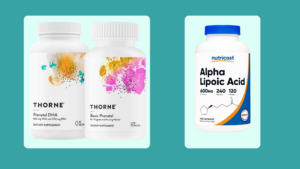
A well-formulated prenatal such as Thorne Basic Prenatal with Folate and Choline is an excellent starting point because it provides methylated folate, active B12, and choline in bioavailable forms — all in a single capsule taken three times daily.
The Best Fertility Supplements to Take After Stopping Birth Control
Once you understand the nutrient gaps created by hormonal contraceptives, the next step is building a targeted supplement protocol. The evidence base for specific supplements in the context of post-pill fertility recovery is growing, and several nutrients stand out as particularly well-supported.
Methylated B vitamins should be at the core of your protocol. A study in Reproductive Biology and Endocrinology found that B6 and B12 deficiencies were significantly associated with anovulatory cycles and early pregnancy loss. B6 specifically supports the conversion of progesterone precursors and is critical for a healthy luteal phase. Our article on B12 deficiency and fertility problems outlines how even subclinical deficiency can interfere with ovulation and implantation.
CoQ10 (Coenzyme Q10) is one of the most evidence-backed supplements for egg quality. It acts as a mitochondrial energiser and antioxidant within follicular fluid. A clinical trial published in the Journal of Clinical Medicine found that CoQ10 supplementation improved ovarian response and egg quality in women with diminished ovarian reserve. Even for women with healthy reserves, the oxidative stress caused by hormonal fluctuations after stopping the pill makes CoQ10 a valuable addition.
Vitex agnus-castus (chasteberry) is a well-studied herb for post-pill cycle regulation. It acts on the pituitary gland to modulate luteinising hormone (LH) and support progesterone production in the second half of the cycle. Research in Phytomedicine found that Vitex shortened the time to cycle normalisation and improved luteal phase length in women with post-pill amenorrhoea. Read more in our guide to Vitex for hormone balance and conception.
Additional supplements worth considering include:
- Inositol (Myo-inositol and D-chiro inositol) — particularly beneficial if your post-pill cycles suggest PCOS or insulin dysregulation; supported by multiple RCTs for improving ovulation frequency.
- NAC (N-acetyl cysteine) — a precursor to glutathione with anti-inflammatory and insulin-sensitising properties relevant to post-pill hormonal recovery.
- Omega-3 fatty acids (EPA and DHA) — essential for reducing systemic inflammation, supporting endometrial receptivity, and improving blood flow to the uterus.
- Vitamin D3 — research consistently links adequate vitamin D levels with higher IVF success rates and spontaneous conception; aim for 2000–4000 IU daily, adjusted to your serum levels.
- Iron — the pill can mask iron status; a post-pill assessment is important, as iron deficiency is a documented but often overlooked cause of ovulatory dysfunction.
For a convenient combined approach, Eu Natural Conception for Her Fertility Supplements blends several of these key nutrients — including inositol, chasteberry, and folate — in a single formula designed for the post-pill transition period. Pairing it with a standalone prenatal ensures comprehensive coverage.
Timing Your Supplement Protocol: The Three-Month Preconception Window
One of the most important concepts in post-pill fertility preparation is the three-month preconception window. Egg development (oogenesis) takes approximately 90 days from primordial follicle recruitment to ovulation. This means that the nutritional environment your body is in right now will directly influence the quality of eggs that become available in three months’ time. Starting supplements at the moment you stop birth control — rather than waiting until you have been trying for several months — gives you the best chance of having optimal egg quality when you begin actively trying to conceive.
Research published in Fertility and Sterility supports the recommendation that women begin taking a prenatal multivitamin at least three months before conception attempts. For women coming off hormonal contraception, this window is even more important because the first one to three post-pill cycles may be anovulatory — meaning ovulation is not occurring — as the hypothalamic-pituitary-ovarian (HPO) axis recalibrates. During this time, supplements like Vitex and inositol can help accelerate this recalibration, while antioxidants like CoQ10 and vitamin E protect egg quality throughout the process.
It is also worth noting that the timing of when fertility returns varies considerably. Most women ovulate within four to six weeks of stopping the combined pill, but some experience delays of three to six months, particularly if they had irregular cycles before starting contraception. This does not indicate a problem with long-term fertility — research consistently shows that cumulative conception rates at 12 months are equivalent between former pill users and those who used non-hormonal contraception. Supplements support this recovery process; they do not replace the natural timeline of hormonal recalibration.
If your cycles have not resumed within three months of stopping the pill, it is worth discussing this with a reproductive health specialist. In the meantime, continuing your supplement protocol and tracking basal body temperature (BBT) can give you valuable data about whether and when ovulation is occurring. Our comprehensive overview of how to prepare your body for pregnancy in 3 months provides a useful parallel framework for this period.
Lifestyle Factors That Amplify the Benefits of Fertility Supplements
Supplements work most effectively when they are embedded within a broader lifestyle strategy that supports hormonal health and reproductive function. The period after stopping birth control is an ideal time to audit several key lifestyle factors that directly influence fertility outcomes.
Diet is foundational. A Mediterranean-style eating pattern — rich in antioxidant vegetables, whole grains, legumes, oily fish, and healthy fats — has been associated with higher rates of natural conception in multiple prospective cohort studies. Prioritise liver and organ meats for concentrated B12 and zinc, Brazil nuts for selenium (which is essential for thyroid health and egg quality), and colourful vegetables for the carotenoids that protect follicular DNA. Reduce ultra-processed foods, refined sugars, and alcohol, all of which increase oxidative stress and disrupt insulin signalling — two mechanisms that directly impair ovulation.
Managing stress is equally important. Chronic psychological stress elevates cortisol, which suppresses GnRH (gonadotropin-releasing hormone) and can delay the return of regular ovulatory cycles after stopping the pill. Adaptogenic herbs such as ashwagandha have promising early evidence for supporting the HPO axis under stress conditions — read more in our article on ashwagandha and female fertility. Mindfulness, yoga, and adequate sleep (seven to nine hours per night) all support healthy cortisol rhythms.
Exercise should be moderate and consistent. Both sedentary behaviour and excessive high-intensity exercise can impair reproductive hormone levels. A target of 150 minutes of moderate aerobic activity per week, combined with two sessions of strength training, appears optimal for hormonal and metabolic health in women of reproductive age. Maintaining a healthy BMI (ideally 20–25) is also relevant, as both underweight and overweight states are associated with anovulation and longer time to conception. If hormonal balance remains a challenge, Happy Healthy Hippie Go With The Flow Hormone Balance for Women combines adaptogenic herbs with cycle-supportive nutrients to complement your foundational prenatal supplement stack.
Frequently Asked Questions
How long does it take for fertility to return after stopping birth control?
Most women ovulate within four to six weeks of stopping the combined oral contraceptive pill. Some experience a delay of up to three to six months, especially if cycles were irregular before starting. Research shows that 12-month conception rates are equivalent to those who used non-hormonal contraception.
Can I take a prenatal vitamin immediately after stopping the pill?
Yes, and it is strongly recommended. Starting a prenatal multivitamin immediately after stopping hormonal contraception helps replenish depleted nutrients like folate, B12, zinc, and magnesium, all of which are critical for ovulation, egg quality, and early embryo development. The earlier you begin, the better.
Is Vitex safe to take right after stopping birth control?
Vitex (chasteberry) is generally considered safe for short-term use in women seeking to regulate post-pill cycles. Clinical studies suggest it can support luteal phase length and progesterone levels. However, it is not recommended during pregnancy, so you should stop taking it once a positive test is confirmed.
Do I need CoQ10 if I am under 35 and have no known fertility issues?
CoQ10 benefits extend beyond women with known fertility challenges. Its role as a mitochondrial antioxidant within follicular fluid supports egg quality at any age. Post-pill oxidative stress and nutrient depletion make CoQ10 a valuable addition for most women in the preconception period, particularly at doses of 200–600 mg daily.
What is the difference between folic acid and methylfolate in prenatal supplements?
Methylfolate (5-MTHF) is the active, bioavailable form of folate that the body can use directly. Folic acid is synthetic and requires enzymatic conversion, which is impaired in women with the MTHFR gene variant — estimated to affect up to 40% of women. Choosing a prenatal with methylfolate ensures reliable absorption and utilisation.
A Word From Vitamins For Woman
Coming off hormonal birth control is a significant transition, and giving your body the right nutritional support during this window can make a meaningful difference to how quickly and smoothly your fertility returns. The evidence is clear: targeted fertility supplements after coming off birth control help replenish depleted nutrients, restore ovulatory function, and optimise the environment in which your eggs develop. Pair your supplement protocol with a nutrient-dense diet, moderate exercise, and stress management for the best possible foundation. As always, we recommend discussing any new supplement regimen with your GP or a qualified reproductive health specialist before starting.
References
- Palmery M, et al. (2013). Oral contraceptives and changes in nutritional requirements. European Review for Medical and Pharmacological Sciences. https://pubmed.ncbi.nlm.nih.gov/23852908/
- Gaskins AJ, et al. (2012). The impact of dietary folate intake on reproductive function in premenopausal women. BJOG: An International Journal of Obstetrics and Gynaecology. https://pubmed.ncbi.nlm.nih.gov/22530782/
- Xu Y, et al. (2018). Pretreatment with coenzyme Q10 improves ovarian response and embryo quality in low-prognosis young women with decreased ovarian reserve. Reproductive Biology and Endocrinology. https://pubmed.ncbi.nlm.nih.gov/29587861/
- Schindler AE. (2014). Non-contraceptive benefits of oral hormonal contraceptives. International Journal of Endocrinology and Metabolism. https://pubmed.ncbi.nlm.nih.gov/24719621/
- Westphal LM, et al. (2006). Double-blind, placebo-controlled study of Fertilityblend: a nutritional supplement for improving fertility in women. Clinical and Experimental Obstetrics and Gynecology. https://pubmed.ncbi.nlm.nih.gov/17089480/