If you’ve ever stood in the supplement aisle staring at a wall of bottles, or fallen down a Reddit rabbit hole at midnight trying to figure out whether you need CoQ10 or ubiquinol, folate or folic acid, myo-inositol or berberine, you’re not alone. The world of fertility supplements is overwhelming, and most of the information out there is either too vague or trying to sell you something.
This guide is different. It breaks down every major fertility supplement by what it actually does, who it’s for, and when to take it — whether you’re just starting to think about trying to conceive, dealing with PCOS, over 35 and concerned about egg quality, preparing for IVF, or navigating unexplained infertility.
We’ve organized everything by category so you can jump straight to what’s relevant to your situation.
Jump to our top product picks →
Do Fertility Supplements Actually Work?
The honest answer is: some of them do, for the right person, in the right situation.
Fertility supplements are not miracle cures. No supplement can guarantee pregnancy, reverse your biological clock, or overcome serious structural or medical issues. What they can do is correct nutritional deficiencies that may be quietly affecting your hormone balance, egg quality, ovulation, and uterine environment all of which play a role in conception.
Research supports the use of specific supplements for specific outcomes. For context, CoQ10 has shown promise in improving egg quality in older women while myo-inositol has strong evidence for improving ovulation in women with PCOS. Folate is well established for reducing the risk of neural tube defects in early pregnancy and Vitamin D deficiency is strongly linked to reduced fertility in women.
Where it gets murky is the supplement industry’s tendency to overpromise. Many products on the market combine dozens of ingredients at doses too low to do anything meaningful, dressed up in impressive packaging. This guide focuses on supplements with actual evidence behind them, not marketing.
Who benefits most from fertility supplements:
- Women with nutritional deficiencies (very common and often undiagnosed)
- Women with PCOS or hormonal imbalances
- Women over 35 where egg quality and ovarian reserve become concerns
- Women preparing for IVF or other assisted reproduction
- Women with specific conditions like endometriosis, thyroid issues, or luteal phase defect
When to see a doctor instead: If you have been trying to conceive for 12 months without success (or 6 months if you are over 35), it is time to see a fertility specialist. Supplements are a complement to medical care, not a replacement for it.
See our top rated fertility supplements on Amazon →
Supplements Every Woman TTC Should Take
Before getting into advanced or targeted supplements, there nutrients that form the foundation of reproductive health. Unfortunately most women are deficient in without knowing it.
Folate vs Folic Acid
This is one of the most important decisions you will make before pregnancy. Folate (the natural form, also called methylfolate) and folic acid (the synthetic form) are not the same thing. Folic acid needs to be converted by your body into its active form, and a significant percentage of women carry a genetic variation called MTHFR that makes this conversion inefficient. If you have MTHFR, taking folic acid instead of methylfolate means much of it is not being used properly. The difference between folate and folic acid matters more than most women realize, and switching to methylfolate is a simple change that can make a real difference.
Vitamin D
Vitamin D is technically a hormone, and its role in female fertility is substantial. It supports follicle development, regulates the immune response in the uterus during implantation, and helps maintain healthy progesterone levels. Studies consistently show that women with low vitamin D levels have lower IVF success rates and longer time to conception. Given that deficiency is extremely common, particularly in women who spend little time outdoors or have darker skin tones, testing your vitamin D level before TTC is one of the smartest first steps you can take.
Iron
Iron deficiency is one of the most common nutritional deficiencies in women of reproductive age, and it directly affects ovulation. Low iron levels have been linked to anovulation cycles (where no egg is released) even when levels are not low enough to cause clinical anaemia. If your periods are heavy or you follow a plant-based diet, getting your ferritin tested is essential before TTC.
Omega 3 Fatty Acids
Omega 3s, particularly DHA and EPA, play a critical role in egg quality and hormone production. They support healthy cell membranes in eggs, reduce inflammation, and help regulate the prostaglandins involved in ovulation. Research on omega 3s and egg quality shows particular benefits for women over 35 and those undergoing IVF.
Vitamin B12
B12 works alongside folate in cell division and DNA synthesis — both critical for early embryo development. B12 deficiency is especially common in women who eat little or no animal products, and low levels have been linked to irregular ovulation and increased risk of miscarriage.
Zinc
Zinc is involved in nearly every stage of the reproductive process — from follicle development to ovulation to fertilisation to implantation. It also plays a key role in progesterone production during the luteal phase. Low zinc levels are associated with hormonal imbalances and poor egg quality, yet zinc is one of the most overlooked fertility nutrients.
Magnesium
Magnesium supports ovulation, regulates cortisol (the stress hormone that can suppress reproductive hormones), and helps maintain progesterone levels in the luteal phase. Many women are unknowingly deficient because magnesium is depleted by stress, caffeine, and alcohol, which is all common in the lives of women TTC.
Selenium
Selenium is an antioxidant that protects eggs and the developing embryo from oxidative damage. It is also essential for the conversion of thyroid hormones and because thyroid health is deeply connected to fertility, selenium deficiency can have a ripple effect on your reproductive system.
Choline
Choline is the most underappreciated preconception nutrient. It is essential for fetal brain development, particularly in the very early weeks of pregnancy before most women even know they are pregnant. Most prenatal vitamins contain little to no choline, and dietary intake rarely meets the recommended amounts for pregnant and preconception women.
| Product | Best For | Amazon Link |
|---|---|---|
| Eu Natural Conception for Her Fertility Supplements for Women | Best overall foundation supplement | Check Price |
| Wholesome Story Myo-Inositol & D-Chiro Inositol Supplement | Best budget option | Check Price |
| Perelel Conception Support Pack | Best prenatal combo for TTC | Check Price |
Advanced Supplements for Egg Quality
Egg quality is one of the most important factors in conception, and unfortunately it declines with age. The good news is that certain supplements support mitochondrial function in eggs, reduce oxidative stress, and improve overall egg health — especially if you are over 35, have low AMH, or are preparing for IVF.
CoQ10
CoQ10 is arguably the most well-researched supplement for egg quality. It is an antioxidant that supports energy production inside your cells, including your eggs. As you age your natural CoQ10 levels drop, which is one reason egg quality declines after 35. Supplementing helps compensate for that decline, and studies show it may improve fertilisation rates and embryo quality. The main decision most women face is whether to take regular CoQ10 or the ubiquinol form. But you should note that ubiquinol is better absorbed and generally recommended for women over 35. Dosage also matters more than most people realise, and getting the right CoQ10 dose for fertility can mean the difference between a supplement that works and one that doesn’t.
DHEA
DHEA is a hormone precursor that supports ovarian reserve, particularly in women with diminished ovarian reserve or low AMH. It is one of the few supplements that fertility clinics actively recommend before IVF cycles, typically started three to six months before treatment. DHEA should not be taken without medical guidance as it affects hormone levels.
Melatonin
Most people think of melatonin only as a sleep aid but it is actually a powerful antioxidant that protects eggs from oxidative damage. Research shows it is particularly useful for women going through IVF cycles, where protecting egg quality during stimulation matters most.
NAD+
NAD+ levels decline significantly with age and this directly affects how well your eggs produce energy at the cellular level. Supplementing with NAD+ precursors like NMN or NR is one of the newer approaches to supporting fertility, especially for women dealing with age-related egg quality decline.
Resveratrol
Resveratrol is a natural compound that has shown promise in protecting egg quality and slowing ovarian aging. It works particularly well alongside CoQ10 as part of a broader egg quality supplement routine.
Vitamin E
Vitamin E supports both egg quality and uterine lining thickness, making it valuable for women who have struggled with implantation failure or have a thin uterine lining going into IVF.
L-arginine
L-arginine improves blood flow to the uterus and ovaries, supporting egg development and uterine lining preparation. It is particularly helpful for women with poor uterine blood flow or thin uterine lining.
| Product | Best For | Amazon Link |
|---|---|---|
| Theralogix NeoQ10 Coenzyme Q10 Supplement | Best CoQ10 for fertility | Check Price |
| BlueBonnet Nutrition Intimate Essentials DHEA 50mg | Best DHEA for low ovarian reserve | Check Price |
| WeNatal Egg Quality+ Supplement | Best all-in-one egg quality supplement | Check Price |
Supplements for PCOS and Fertility
PCOS is the most common cause of ovulatory infertility, affecting roughly 1 in 10 women. The condition involves hormonal imbalance, insulin resistance, and chronic low-grade inflammation — all of which can be addressed to varying degrees with targeted supplementation.
Myo-Inositol
Myo-inositol is the gold standard supplement for PCOS fertility. It improves insulin sensitivity, helps regulate ovulation, lowers androgens, and supports egg quality. The evidence behind myo-inositol for PCOS is stronger than almost any other supplement in this niche, and it is often the first thing fertility doctors recommend to PCOS patients who want to conceive naturally.
Berberine vs Myo-Inositol
Berberine is a plant compound that works similarly to metformin in improving insulin sensitivity. Comparing berberine to myo-inositol is a common question among women with PCOS — both are effective but they work through different mechanisms and the right choice depends on your specific PCOS presentation.
NAC (N-Acetyl Cysteine)
NAC is an antioxidant and insulin sensitiser that has shown real promise for PCOS and fertility. It reduces oxidative stress, improves hormonal balance, and in some studies has outperformed metformin for inducing ovulation in PCOS patients.
Licorice Root
Licorice root helps lower androgens (male hormones that are typically elevated in PCOS) and supports hormone balance in women with androgen-dominant PCOS. It is best used short-term and under guidance.
PCOS and Insulin Resistance
Insulin resistance drives many of the fertility challenges in PCOS like elevated insulin raises LH, increases androgen production, and disrupts ovulation. Supplements that target insulin resistance directly, including myo-inositol, berberine, NAC, and magnesium, form the most effective foundation for restoring ovulation in PCOS.
| Product | Best For | Amazon Link |
|---|---|---|
| Wholesome Story Myo-Inositol & D-Chiro Inositol Supplement for Women | Best myo-inositol for PCOS | Check Price |
| Wholesome Story Berberine Supplement 1500mg | Best berberine supplement for PCOS | Check Price |
| 14-in-1 Women’s Inositol Complex Supplement | Best PCOS fertility supplement | Check Price |
Supplements by Condition
Beyond PCOS, several other conditions affect female fertility and respond well to targeted supplementation.
Endometriosis
Endometriosis involves chronic inflammation and oxidative stress that damage eggs and disrupt implantation. Anti-inflammatory supplements including omega 3s, NAC, vitamin E, and resveratrol are most commonly recommended for women with endometriosis who are TTC.
Low AMH
AMH (anti-Müllerian hormone) is a marker of ovarian reserve. Low AMH means fewer eggs remaining, but it does not mean conception is impossible. Supplements that support ovarian reserve — particularly DHEA, CoQ10, and NAD+ — are often used by women with low AMH to improve the quality of the eggs they do have.
Luteal Phase Defect
A short luteal phase or low progesterone after ovulation can prevent implantation or cause early miscarriage. Supplements that support the luteal phase include vitex, vitamin B6, magnesium, and progesterone cream.
Estrogen Dominance
When estrogen is too high relative to progesterone it can interfere with ovulation and implantation. Supplements that help balance estrogen include DIM (diindolylmethane), calcium d-glucarate, and vitex.
Thyroid Issues
The thyroid gland has a profound effect on fertility. Even subclinical hypothyroidism can cause irregular cycles, poor egg quality, and early miscarriage. Thyroid support supplements including selenium, zinc, iodine, and ashwagandha are worth discussing with your doctor if you have thyroid concerns.
Unexplained Infertility
When no clear cause of infertility is found, a broad-spectrum approach to supplementation makes sense. Supplements for unexplained infertility typically include CoQ10, vitamin D, omega 3s, and antioxidants to address the most common underlying nutritional factors.
Progesterone Support
Low progesterone in the second half of the cycle is more common than many women realise and can cause luteal phase defect or recurrent early pregnancy loss. Supporting progesterone naturally through vitex, vitamin B6, and zinc can help, while some women opt for topical progesterone cream.
Vaginal Health and Conception
The vaginal microbiome affects fertility more than most people know. An imbalanced microbiome can create a hostile environment for sperm and increase the risk of early pregnancy complications. Probiotics for vaginal health are increasingly recommended as part of a preconception supplement routine.
Collagen and Reproductive Health
Collagen supports the structural integrity of the uterine lining and ovarian tissue. While research is still emerging, collagen and reproductive health is an area gaining attention particularly among women with thin uterine lining or recurrent implantation failure.
| Product | Best For | Amazon Link |
|---|---|---|
| Metabolic Maintenance DIM Complex | Best supplement for endometriosis | Check Price |
| NATURE TARGET CoQ10-400mg | Best for low AMH | Check Price |
| Proov – Pro | Best for luteal phase defect | Check Price |
| Calcium D-Glucarate with DIM Supplement | Best for estrogen dominance | Check Price |
Fertility Supplements by Age
Your supplement needs change depending on where you are in your reproductive years. Age affects egg quality, ovarian reserve, and hormone levels — all of which influence which supplements are most important.
TTC Under 35
If you are under 35 and have no known fertility issues, your focus should be on foundation nutrients and preparing your body for pregnancy in the three to six months before you start trying. A good prenatal vitamin covering methylfolate, vitamin D, iron, omega 3, B12, and zinc is a strong starting point.
TTC Over 35
After 35, egg quality becomes the primary concern. In addition to foundation supplements, improving egg quality after 35 becomes a priority — CoQ10, ubiquinol, NAD+, and DHEA are most relevant for this age group. Starting these supplements three to six months before TTC gives them time to work through a full egg development cycle.
TTC Over 40
Over 40, both egg quality and ovarian reserve are considerations. Fertility supplements for women over 40 lean heavily on the egg quality stack — CoQ10 or ubiquinol at higher doses, DHEA, NAD+, resveratrol, and melatonin — alongside the full foundation protocol.
| Product | Best For | Amazon Link |
|---|---|---|
| Nature’s Craft Fertility Supplements for Women | Best fertility supplement under 35 | Check Price |
| WeNatal Egg Quality+ Supplement | Best fertility supplement over 35 | Check Price |
| Intimate Rose Myo-Inositol & D-Chiro Inositol Supplement for Women | Best fertility supplement over 40 | Check Price |
Herbal and Adaptogen Fertility Supplements
Herbal supplements have been used for fertility support for centuries, and several have meaningful research behind them. They tend to work more gently and slowly than pharmaceutical interventions, and some interact with medications or hormonal treatments, so always check with your doctor before adding them.
Ashwagandha
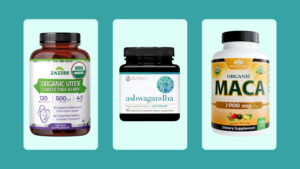
Ashwagandha is an adaptogen that lowers cortisol, supports thyroid function, and helps regulate reproductive hormones. High stress is a known disruptor of ovulation, and ashwagandha’s effect on female fertility is partly through its ability to bring the stress-hormone system back into balance.
Maca Root
Maca is a Peruvian root vegetable that has been shown to support libido, energy, and hormonal balance without directly affecting estrogen or progesterone levels. Maca root for fertility is particularly popular among women with low libido or fatigue while TTC.
Evening Primrose Oil
Evening primrose oil is rich in gamma-linolenic acid (GLA) and is commonly used to improve cervical mucus quality in the first half of the cycle. Better cervical mucus means better sperm survival and transport. It should be stopped at ovulation as it may cause uterine contractions.
Royal Jelly
Royal jelly is a nutrient-dense substance produced by bees that contains a range of vitamins, minerals, and fatty acids. Royal jelly’s fertility benefits are thought to come from its antioxidant properties and its ability to support egg quality and hormonal balance.
Vitex (Chaste Tree Berry)
Vitex is one of the most widely used herbal supplements for female fertility. It works by supporting the pituitary gland’s production of LH and progesterone, making it particularly useful for women with luteal phase issues or irregular cycles. It takes several months to show effect and should not be used alongside hormonal medications without guidance.
Adaptogens for Fertility Stress
The stress of trying to conceive is real — and chronic stress suppresses ovulation. A range of adaptogen herbs including ashwagandha, rhodiola, and holy basil can help modulate the body’s stress response and support hormonal balance during the TTC journey.
| Product | Best For | Amazon Link |
|---|---|---|
| Intimate Rose Myo-Inositol & D-Chiro Inositol Supplement for Women | Best ashwagandha for fertility | Check Price |
| NaturaLife Labs Organic Maca Root | Best maca root supplement | Check Price |
| Clean Nutraceuticals Myo-Inositol & D-Chiro Inositol 2050mg Fertility Supplement | Best herbal fertility supplement | Check Price |
How to Build Your Fertility Supplement Routine
Knowing which supplements to take is only half the battle. How you take them, when you start, and how you combine them matters just as much.
How Long Before TTC to Start
Most fertility supplements need time to work. CoQ10, DHEA, and myo-inositol all require at least two to three months to show meaningful effect because it takes approximately 90 days for an egg to mature from its earliest stage to ovulation. Starting your supplements early enough is one of the most common mistakes women make — beginning them the month you start trying is too late for many of the most important ones.
Building Your Supplement Stack
Rather than taking everything at once, building a fertility supplement stack strategically means starting with foundation nutrients, adding targeted supplements based on your specific situation, and avoiding unnecessary overlap or potential interactions. A thoughtful stack is more effective than a crowded one.
What to Avoid Combining
Some supplements compete for absorption or amplify each other’s effects in ways that can be counterproductive. Iron and calcium should not be taken together. High-dose zinc can deplete copper. Fat-soluble vitamins like A, D, E, and K can accumulate if overdosed. Always read labels and consider total intake across all products you are taking.
What to Stop Once Pregnant
Several supplements that are beneficial for fertility should be paused or stopped once pregnancy is confirmed — including DHEA, high-dose vitamin A, evening primrose oil, and most herbal supplements. Transition to a comprehensive prenatal vitamin as soon as you get a positive test.
Master Comparison Table
Here are the top picks across every category covered in this guide.
| Category | Top Pick | Amazon Link |
|---|---|---|
| Best overall fertility supplement for women | Eu Natural Conception for Her Fertility Supplements for Women | Check Price |
| Best fertility supplement for PCOS | 14-in-1 Women’s Inositol Complex Supplement | Check Price |
| Best supplement for egg quality | WeNatal Egg Quality+ Supplement | Check Price |
| Best herbal fertility supplement | Clean Nutraceuticals Myo-Inositol & D-Chiro Inositol 2050mg Fertility Supplement | Check Price |
| Best fertility supplement for women over 35 | WeNatal Egg Quality+ Supplement | Check Price |
| Best fertility supplement for women over 40 | Intimate Rose Myo-Inositol & D-Chiro Inositol Supplement for Women | Check Price |
| Best budget fertility supplement | Wholesome Story Myo-Inositol & D-Chiro Inositol Supplement | Check Price |
A Word From Vitamins For Woman
Fertility supplements are not magic, but used correctly they can meaningfully support your body’s ability to conceive. The most important starting point for almost every woman is the foundation stack — methylfolate, vitamin D, iron, omega 3, B12, zinc, and magnesium. From there, your specific situation determines what else belongs in your routine.
If you have PCOS, myo-inositol is likely your most important addition. If you are over 35 or concerned about egg quality, CoQ10 or ubiquinol should be at the top of your list. If you are preparing for IVF, work with your clinic to time your supplements correctly around your cycle.
Whatever your situation, give your supplements time to work.
Always work alongside a doctor or fertility specialist, use your supplement routine to complement medical care rather than replace it, and remember that nutrition, sleep, stress management, and lifestyle are the foundation that everything else sits on.
If you are also building out your preconception health beyond supplements, explore our guides on prenatal vitamins and hormonal balance for women for more support across every stage of the journey.