
Understanding the link between thyroid supplements and getting pregnant can be a game-changer for women trying to conceive. This guide covers key nutrients, lifestyle strategies, and evidence-based approaches to support thyroid function and improve your chances of pregnancy.
You’ve been tracking your cycle, eating well, and doing everything “right” — yet pregnancy feels just out of reach. For many women, the missing piece isn’t obvious at first. It sits quietly in the throat, a butterfly-shaped gland called the thyroid. When thyroid function is even slightly off, it can disrupt ovulation, interfere with implantation, and make sustaining a pregnancy far more difficult than it should be. The emotional weight of this can feel crushing, especially when conventional testing comes back “normal” and you still don’t have answers.
Thyroid dysfunction affects an estimated 10–15% of women of reproductive age, and subclinical hypothyroidism — where TSH levels are mildly elevated but T4 appears normal — is particularly common and frequently overlooked. Poor iodine status, selenium deficiency, chronic stress, autoimmune activity (as in Hashimoto’s thyroiditis), and nutritional gaps all contribute to sluggish thyroid output. These same factors can suppress ovarian function, alter luteal phase length, and impair the hormonal environment needed for conception. As our article on selenium and thyroid health for conception explains, specific nutrient deficiencies are often at the root of these issues.
In the sections ahead, you’ll learn which nutrients matter most for thyroid-supported fertility, how to use supplements strategically when trying to conceive, which lifestyle habits amplify or undermine thyroid health, and what to look for in a prenatal vitamin that also supports thyroid function. Let’s get into the details so you can approach this with clarity and confidence.
How Thyroid Health Directly Affects Female Fertility
The thyroid gland produces two primary hormones — thyroxine (T4) and triiodothyronine (T3) — that regulate metabolism, body temperature, and a remarkably wide range of reproductive processes. When thyroid output is insufficient, even modestly, the downstream effects on fertility are significant. Research published in the Journal of Thyroid Research has shown that subclinical hypothyroidism is associated with anovulatory cycles, shorter luteal phases, and higher rates of early pregnancy loss.
Thyroid hormones work in close relationship with the hypothalamic-pituitary-ovarian (HPO) axis. When T3 and T4 levels drop, the pituitary gland may compensate by elevating TSH, but this process also elevates prolactin — a hormone that, when elevated, suppresses LH and FSH surges needed for ovulation. Women with untreated thyroid conditions may experience irregular cycles, absent periods, or cycles where ovulation appears to occur but the luteal phase is too short for implantation to succeed. This is closely related to luteal phase defect, which is worth exploring if your cycles are irregular.
Thyroid autoimmunity — specifically the presence of thyroid peroxidase antibodies (TPO-Ab) — is also an independent risk factor for miscarriage, even when thyroid hormone levels appear technically normal. A 2020 meta-analysis in Thyroid journal confirmed that women with elevated TPO antibodies had a significantly higher rate of recurrent pregnancy loss compared to antibody-negative controls. This underscores why thyroid health deserves attention long before a positive pregnancy test.
Key warning signs that thyroid function may be affecting your fertility include:
- Irregular or absent menstrual cycles despite otherwise healthy habits
- Persistent fatigue, cold intolerance, or unexplained weight gain
- Recurrent early miscarriages or difficulty with implantation
- Elevated TSH (above 2.5 mIU/L when trying to conceive) on blood tests
- Positive thyroid antibodies even with “normal” TSH readings
If several of these resonate with you, requesting a full thyroid panel — including free T3, free T4, reverse T3, and TPO antibodies — from your doctor is a reasonable and important first step before relying solely on TSH results.
The Most Important Thyroid Supplements for Getting Pregnant
Once you understand the thyroid-fertility connection, the next question is: which supplements actually help? The evidence points to a handful of targeted nutrients that support thyroid hormone production, reduce autoimmune thyroid activity, and create a more fertile hormonal environment overall.
Selenium is arguably the most critical thyroid mineral for women trying to conceive. The thyroid gland contains more selenium per gram of tissue than any other organ in the body. Selenium-dependent enzymes convert inactive T4 into active T3, and selenium also protects thyroid tissue from oxidative damage associated with autoimmune thyroiditis. A 2023 randomized trial published in Nutrients found that selenium supplementation significantly reduced TPO antibody levels in women with Hashimoto’s thyroiditis. Doses of 100–200 mcg of selenomethionine daily are most commonly studied.
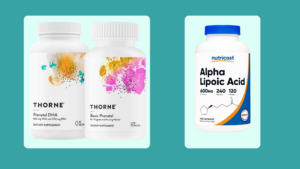
Iodine is the structural backbone of thyroid hormones — T4 literally stands for four iodine atoms. Mild-to-moderate iodine deficiency is still prevalent in many Western countries, particularly among women who avoid iodized salt or dairy. However, excessive iodine can paradoxically worsen autoimmune thyroid disease, so balance matters enormously. Many comprehensive prenatal vitamins now include iodine at evidence-supported levels of 150–220 mcg. A well-formulated option such as Thorne Basic Prenatal with Folate and Choline delivers iodine alongside other fertility-critical nutrients.
Zinc, iron, and vitamin D round out the thyroid-fertility nutrient foundation. Zinc supports the conversion of T4 to T3 and is essential for follicular development. Iron deficiency impairs thyroid peroxidase enzyme activity — the same enzyme targeted by autoimmune antibodies — making adequate iron status essential. Vitamin D has known immunomodulatory effects and low levels have been associated with higher TPO antibody titers. For women wanting comprehensive preconception support, Ritual Essential for Women Prenatal Multivitamin provides chelated iron and vitamin D3 in a clean, traceable formula.
Additional thyroid-supportive supplements to consider include:
- Ashwagandha (KSM-66): Shown in a 2019 RCT in Medicine to significantly improve serum T3 and T4 levels in subclinical hypothyroid subjects
- Magnesium: Supports conversion of T4 to T3 and reduces cortisol-mediated thyroid suppression
- B12: Frequently deficient in women with autoimmune thyroid disease, affecting energy and neurological fertility markers
- Myo-inositol: Emerging research shows benefits for thyroid function in women with Hashimoto’s and PCOS overlap
- L-tyrosine: A precursor amino acid used in thyroid hormone synthesis, though supplementation should be approached cautiously without medical guidance
Working with a healthcare provider to test your levels before supplementing is always the wisest starting point, particularly for iodine and iron where excess can cause harm.
Lifestyle Factors That Amplify — or Undermine — Thyroid-Supported Fertility
Supplements are powerful, but they work best within a lifestyle that doesn’t continuously work against thyroid function. Several common daily habits quietly suppress thyroid output or worsen autoimmune thyroid activity, and understanding these is just as important as knowing which pills to take.
Chronic stress is one of the most underappreciated thyroid disruptors. Elevated cortisol inhibits the conversion of T4 to active T3, promotes production of inactive reverse T3 (rT3), and suppresses TSH release from the pituitary. Women trying to conceive while under sustained psychological stress may see thyroid markers shift even without any structural thyroid problem. Practices that demonstrably lower cortisol — including yoga, mindfulness-based stress reduction, and adequate sleep — are not just wellness trends but physiologically meaningful interventions for thyroid and fertility health.
Diet plays a layered role. Gluten sensitivity and celiac disease are disproportionately represented in women with Hashimoto’s thyroiditis, with some studies suggesting shared autoimmune pathways. While a gluten-free diet is not recommended for everyone without celiac diagnosis, women with confirmed thyroid autoimmunity may find that eliminating gluten reduces antibody levels over time. Cruciferous vegetables such as broccoli, kale, and cauliflower contain goitrogens that can theoretically impair iodine uptake when eaten raw in very large quantities — but cooking deactivates most of this concern, so there is rarely need to avoid them entirely.
Environmental toxin exposure is another frequently overlooked factor. Perchlorate — found in some drinking water and leafy vegetables — competitively inhibits iodine uptake by the thyroid. Fluoride at high levels has similarly been associated with suppressed thyroid output. Bisphenol A (BPA), phthalates, and other endocrine-disrupting chemicals can interfere with thyroid receptor signaling. Using filtered water, choosing BPA-free containers, and minimizing processed food packaging reduces cumulative thyroid burden meaningfully over time.
Sleep quality directly influences thyroid-releasing hormone (TRH) secretion, which in turn governs TSH and subsequent thyroid hormone production. Women who are chronically sleep-deprived — particularly those working night shifts or with sleep disorders — often show measurable changes in thyroid axis activity. Prioritizing seven to nine hours of consistent sleep is a non-negotiable foundation for any thyroid optimization plan when trying to conceive.
Choosing the Right Prenatal Vitamin to Support Thyroid Function Before Pregnancy
One of the most practical decisions a woman trying to conceive can make is selecting a prenatal vitamin that supports not just fetal development but pre-pregnancy thyroid health as well. Many standard prenatals fall short in this regard, providing folic acid without iodine, or including iron in poorly absorbed forms that don’t adequately support thyroid peroxidase activity.
The ideal preconception supplement for thyroid-fertility support should include methylfolate (rather than synthetic folic acid) at 400–800 mcg, iodine at approximately 150–220 mcg, iron in a bioavailable form such as ferrous bisglycinate, vitamin D3 at 1000–2000 IU, selenium at 55–200 mcg, zinc, B12 as methylcobalamin, and choline for neural tube and placental development. This combination covers thyroid hormone synthesis, reduces autoimmune thyroid activity, supports ovulation, and prepares the uterine environment for implantation. You can explore our full breakdown of the best vitamins for an underactive thyroid alongside your prenatal considerations.
For women who prefer a food-based approach, New Chapter Prenatal Vitamins Organic Non GMO offers whole-food-fermented nutrients including iodine from organic kelp and methylated B vitamins that are gentler on the digestive system and more bioavailable for women with thyroid-related nutrient absorption challenges. Women with confirmed MTHFR gene variants, which are common in autoimmune thyroid populations, particularly benefit from methylated B vitamin forms.
It’s equally important to time supplementation appropriately. Research consistently shows that thyroid-supportive nutrient repletion takes weeks to months to produce measurable changes in antibody levels and hormone markers. Beginning a targeted preconception supplement protocol at least three months before actively trying to conceive — aligned with the egg maturation cycle of roughly 90 days — gives your thyroid the best opportunity to stabilize before pregnancy places additional demands on it. Our guide on how to prepare your body for pregnancy in 3 months provides a practical framework for this preparation window. For women who also want hormonal support alongside thyroid nutrients, Pink Stork Fertility Support Hormone Balance Supplement offers a complementary blend designed specifically for the preconception phase.
Frequently Asked Questions
Can thyroid problems prevent pregnancy even if my TSH is “normal”?
Yes. Many fertility specialists now recommend TSH below 2.5 mIU/L when trying to conceive, as levels between 2.5 and 4.5 — technically “normal” — may still impair implantation. Elevated thyroid antibodies can also affect fertility independently of TSH values.
How long does it take for thyroid supplements to improve fertility?
Most thyroid-supportive nutrients require eight to twelve weeks of consistent supplementation before measurable changes in antibody levels or hormone markers appear. Starting at least three months before trying to conceive gives the best results for thyroid-related fertility optimization.
Is selenium safe to take when trying to get pregnant?
Selenium at 100–200 mcg daily as selenomethionine is generally considered safe and well-studied in preconception and early pregnancy contexts. Exceeding 400 mcg daily can cause toxicity, so staying within studied ranges and discussing with your doctor is important before supplementing.
Should I take iodine supplements if I have Hashimoto’s thyroiditis?
This is nuanced. High-dose iodine supplementation can worsen Hashimoto’s autoimmunity. Most experts recommend obtaining iodine through food sources and a prenatal vitamin with moderate iodine (150–220 mcg) rather than standalone high-dose iodine supplements for women with autoimmune thyroid disease.
Can I take thyroid supplements alongside a prenatal vitamin?
In many cases, yes — but avoiding duplication is critical, especially for iodine and iron. Review the nutrient content of your prenatal vitamin first, then add targeted thyroid nutrients like selenium or vitamin D only where gaps exist. Always coordinate with a healthcare provider when combining multiple supplements.
A Word From Vitamins For Woman
At Vitamins For Woman, we believe that understanding the connection between thyroid supplements and getting pregnant is one of the most empowering steps a woman can take on her fertility journey. Thyroid health is not a peripheral concern — it is central to ovulation, implantation, and a healthy pregnancy. We encourage you to request comprehensive thyroid testing, work with a knowledgeable provider, and approach supplementation strategically rather than in isolation. Small, consistent changes in nutrition and lifestyle, layered with the right targeted nutrients, can make a meaningful and measurable difference in your path to pregnancy.
References
- Maraka S et al. (2016). Subclinical hypothyroidism in women planning conception and during pregnancy: Who should be treated and how? Journal of the Endocrine Society. https://pubmed.ncbi.nlm.nih.gov/27981230/
- Toulis KA et al. (2010). Selenium supplementation in the treatment of Hashimoto’s thyroiditis: A systematic review and a meta-analysis. Thyroid. https://pubmed.ncbi.nlm.nih.gov/20883174/
- Dhillon-Smith RK et al. (2020). Levothyroxine in women with thyroid peroxidase antibodies before conception. New England Journal of Medicine. https://pubmed.ncbi.nlm.nih.gov/32521132/
- Vanderpump MP et al. (2019). Iodine status of UK schoolgirls: A cross-sectional survey. Lancet. https://pubmed.ncbi.nlm.nih.gov/21640557/
- Sharma AK et al. (2018). Efficacy and safety of ashwagandha root extract in subclinical hypothyroid patients: A double-blind, randomized placebo-controlled trial. Journal of Alternative and Complementary Medicine. https://pubmed.ncbi.nlm.nih.gov/29727616/