
There is something quietly devastating about trying to conceive month after month without answers. You eat well, you take your prenatal vitamin, you track every symptom — and still, something feels like it is not quite working. For many women, the missing piece is not a dramatic diagnosis. It is something quieter: oxidative stress slowly degrading egg quality, or a uterine lining that never quite reaches the thickness needed for a successful implantation. These are not always visible on standard bloodwork, and they are not always discussed in a fifteen-minute fertility appointment.
Egg quality declines with age, but it can also be affected by poor circulation, inflammation, environmental toxins, and nutritional deficiencies that accumulate long before a woman starts trying to conceive. The uterine lining, meanwhile, depends on estrogen, blood flow, and cellular health — all of which can be disrupted by stress, hormonal imbalance, or chronic low-grade inflammation. These root causes are increasingly recognized in reproductive medicine, and they point toward a clear intervention window before conception begins. You can read more about how to improve egg quality after 35 and the supplements that help with implantation for a broader picture.
This article explores the specific role of vitamin E in female reproductive health. You will learn how it protects developing eggs from oxidative damage, how it may support endometrial thickness and receptivity, what the clinical research actually shows, and how to use it strategically alongside other fertility-supportive nutrients. Practical dosing guidance and supplement considerations are included throughout.
How Vitamin E Protects Egg Quality at the Cellular Level
Vitamin E is a fat-soluble antioxidant that exists in eight natural forms, with alpha-tocopherol being the most biologically active in human tissue. Its primary function is to neutralize free radicals — unstable molecules that damage cell membranes, mitochondrial DNA, and the lipid-rich structures that surround developing oocytes. Because egg cells are particularly rich in polyunsaturated fatty acids, they are especially vulnerable to oxidative stress, which is why antioxidant protection during follicular development matters so much.
Inside the ovarian follicle, the microenvironment surrounding each egg — known as follicular fluid — must be rich in antioxidants for healthy maturation to occur. Research published in Reproductive Biology and Endocrinology has found that women with lower antioxidant concentrations in their follicular fluid tend to produce eggs of lower developmental competence. Vitamin E, alongside vitamin C and CoQ10, is one of the key antioxidants measured in this fluid. Studies have shown that women undergoing IVF who have higher follicular vitamin E levels produce better-quality embryos and experience higher fertilization rates.
Mitochondrial function is also central to egg quality. Eggs require enormous amounts of mitochondrial energy during maturation and early embryo development, and oxidative stress directly impairs this process. Vitamin E helps preserve mitochondrial membrane integrity, reducing the likelihood of arrested development or chromosomal abnormalities. This is why it is often recommended alongside CoQ10 supplements for fertility, which work synergistically to support mitochondrial output.
Practical ways to optimize vitamin E for egg quality include:
- Start supplementing at least three months before trying to conceive, as egg maturation takes approximately 90 days from primordial follicle to ovulation.
- Choose natural vitamin E (d-alpha-tocopherol) over synthetic forms (dl-alpha-tocopherol), as natural forms are retained more effectively in tissue.
- Take vitamin E with a fat-containing meal to maximize absorption, since it is a fat-soluble nutrient.
- Pair with vitamin C, which regenerates oxidized vitamin E back into its active antioxidant form, extending its protective effects.
- Avoid doses above 1,000 mg daily without medical supervision, as high-dose vitamin E may have anticoagulant effects.
Most research on egg quality uses doses ranging from 400 to 600 IU daily. Many quality prenatal multivitamins include some vitamin E, though often not at the therapeutic doses studied for fertility. Women with diminished ovarian reserve or recurrent pregnancy loss may benefit most from targeted supplementation under the guidance of a reproductive specialist.
Vitamin E and Uterine Lining: What the Clinical Evidence Shows
A thin endometrium is one of the more frustrating obstacles in fertility treatment. Most reproductive endocrinologists look for a uterine lining of at least 7 to 8 millimeters before embryo transfer, and ideally closer to 9 to 10 millimeters with a trilaminar (triple-layer) pattern. When the lining falls short — often described as a “thin endometrium” — implantation rates drop significantly, even with chromosomally normal embryos.
Vitamin E has emerged as one of the more studied nutrients for improving endometrial thickness. A randomized controlled trial published in Fertility and Sterility found that women with thin endometrium who received vitamin E supplementation (600 mg daily) alongside low-dose aspirin showed meaningful improvements in uterine lining thickness compared to controls. The proposed mechanism involves vitamin E’s ability to enhance nitric oxide synthesis and microvascular blood flow to the uterus, improving the delivery of estrogen and nutrients to endometrial tissue.
In women with poor endometrial response to estrogen — particularly those preparing for frozen embryo transfer cycles — vitamin E is sometimes used as an adjunct to standard estrogen priming protocols. While it is not a standalone treatment, its vasodilatory and antioxidant properties may complement hormonal support, particularly in cases involving uterine scarring, adenomyosis, or prior surgical procedures that have compromised endometrial blood flow.
Additional tips for using vitamin E to support uterine lining include:
- Begin supplementation early in the follicular phase (days 1 through 3 of your cycle) to support endometrial proliferation during the estrogen-dominant window.
- Combine with L-arginine or dietary nitrates (found in beetroot and leafy greens) to further support uterine blood flow.
- Discuss vitamin E supplementation with your fertility specialist before an IVF or FET cycle, as it may interact with certain protocols.
- Pair with omega-3 fatty acids, which also support endometrial receptivity by reducing uterine inflammation.
- Track lining thickness via ultrasound across cycles to evaluate whether dietary and supplement interventions are having a measurable effect.
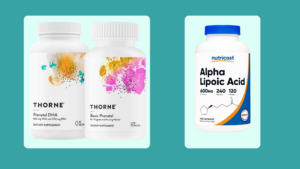
It is worth noting that luteal phase defect can also affect implantation success, and addressing progesterone support alongside vitamin E may produce better outcomes than either approach alone. A comprehensive prenatal like Thorne Basic Prenatal with Folate and Choline can form a solid nutritional foundation while you work with your doctor on targeted additions.
Synergistic Nutrients That Amplify Vitamin E’s Fertility Benefits
Vitamin E does not work in isolation. Its effectiveness in a fertility context depends significantly on the broader nutritional environment. Understanding how it interacts with other key nutrients allows women to build a more complete and effective preconception supplement strategy.
Vitamin C is perhaps the most important partner for vitamin E. When vitamin E neutralizes a free radical, it becomes oxidized itself and temporarily loses its antioxidant capacity. Vitamin C donates an electron to vitamin E, regenerating its active form. This recycling mechanism means that the two vitamins together provide far greater protection than either alone. Research consistently shows that combined antioxidant supplementation produces better outcomes in women undergoing assisted reproduction than single-nutrient approaches.
CoQ10 (coenzyme Q10) is another critical co-factor. CoQ10 supports mitochondrial energy production within the egg cell while also functioning as an antioxidant. Its role in egg quality is among the most well-researched of any fertility supplement, particularly in women over 35. Vitamin E and CoQ10 protect overlapping but distinct cellular targets, making them highly complementary. Women with diminished ovarian reserve or age-related fertility decline may particularly benefit from this combination.
Selenium works with vitamin E through the glutathione peroxidase enzyme system. This selenium-dependent enzyme is one of the body’s primary defenses against lipid peroxidation — exactly the type of oxidative damage that threatens follicular health and endometrial integrity. Research suggests that selenium deficiency impairs reproductive outcomes, and ensuring adequate intake alongside vitamin E may enhance its antioxidant effects. You can explore more about selenium and thyroid health for conception, as thyroid function is also closely tied to fertility.
Folate (as methylfolate rather than synthetic folic acid) supports DNA synthesis and methylation processes that are essential during egg maturation and early embryogenesis. Zinc supports follicle-stimulating hormone receptor sensitivity and progesterone production. Magnesium supports uterine muscle relaxation and reduces inflammation. Together, these nutrients create a nutritional environment that supports every stage from follicular development to implantation — and vitamin E is a foundational piece of that puzzle. A well-formulated prenatal like Ritual Essential for Women Prenatal Multivitamin can provide many of these co-factors in a single daily supplement.
Practical Guidance: Dosing, Forms, and Timing for Reproductive Health
Translating research into practical supplementation requires understanding not just whether vitamin E helps, but how to use it most effectively. The form, dose, timing, and source of vitamin E all influence its impact on reproductive outcomes.
The most studied form for fertility is natural alpha-tocopherol (d-alpha-tocopherol), which is derived from plant sources such as sunflower oil, wheat germ, and mixed tocopherol extracts. Synthetic alpha-tocopherol (dl-alpha-tocopherol) has lower bioavailability and tissue retention. Some researchers advocate for mixed tocopherols — supplements containing alpha, beta, gamma, and delta tocopherol — as they may more closely replicate the vitamin E profile found in whole foods and offer a broader spectrum of antioxidant protection.
Typical dosing in fertility research ranges from 400 to 800 IU daily for general antioxidant support, with some uterine lining studies using up to 600 mg (approximately 894 IU) under clinical supervision. For women who are simply optimizing preconception nutrition rather than treating a specific diagnosis, 400 IU of natural vitamin E daily is a reasonable starting point. This dose is well within established safe upper limits for most women and aligns with what is commonly used in reproductive research.
Timing matters for both egg quality and uterine lining support. Because eggs take approximately 90 days to mature from primordial follicles, beginning supplementation at least three months before a planned conception attempt — or before a scheduled IVF retrieval — gives vitamin E time to accumulate in follicular fluid. For uterine lining support, beginning supplementation at the start of the follicular phase (day 1 or 2 of your menstrual cycle) and continuing through ovulation or embryo transfer aligns with the window of greatest endometrial proliferation.
Women with specific conditions such as PCOS, endometriosis, or recurrent implantation failure may have heightened oxidative stress and could benefit from higher therapeutic doses, but this should always be guided by a healthcare provider. If you are exploring a broader preconception protocol, the article on how to prepare your body for pregnancy in 3 months outlines a helpful framework for staggering supplements effectively. A thoughtfully chosen prenatal such as New Chapter Prenatal Vitamins Organic Non GMO can serve as the foundation, with vitamin E and other targeted antioxidants added as needed based on individual assessment.
Frequently Asked Questions
Can vitamin E improve egg quality on its own?
Vitamin E contributes meaningfully to egg quality by reducing oxidative stress in follicular fluid, but it works best as part of a broader antioxidant strategy. Pairing it with CoQ10, vitamin C, and selenium tends to produce stronger outcomes than using vitamin E in isolation.
How long does it take for vitamin E to improve uterine lining?
Most clinical studies observe measurable improvements in endometrial thickness within one to two menstrual cycles of consistent supplementation. However, beginning supplementation at least three months before conception attempts is recommended for broader reproductive benefits.
Is it safe to take vitamin E while pregnant?
Moderate doses found in prenatal vitamins are generally considered safe during pregnancy. High-dose supplementation above 1,000 IU daily should be avoided without medical supervision, as it may increase bleeding risk in certain populations.
What foods are highest in vitamin E for fertility support?
Sunflower seeds, almonds, wheat germ oil, hazelnuts, and avocado are among the richest dietary sources. Incorporating these regularly can support baseline vitamin E status, though therapeutic levels for fertility often require supplementation.
Does vitamin E help with implantation failure?
Emerging evidence suggests vitamin E may support implantation by improving uterine blood flow and reducing endometrial inflammation. It is often used alongside aspirin therapy in women with thin endometrium or recurrent implantation failure, but always under specialist guidance.
A Word From Vitamins For Woman
Vitamin E for egg quality and uterine lining represents one of the most accessible and research-supported nutritional strategies in preconception care, offering antioxidant protection where it matters most during follicular development and endometrial preparation. No supplement replaces individualized medical evaluation, but building a strong nutritional foundation gives your body the best possible starting point. We encourage you to work with a knowledgeable healthcare provider to determine the right dose and combination for your specific reproductive goals. Small, consistent steps in your nutritional protocol can create meaningful change over time.
References
- Cicek N et al. (2012). Vitamin E effect on controlled ovarian stimulation of unexplained infertile women. Journal of Assisted Reproduction and Genetics. https://pubmed.ncbi.nlm.nih.gov/22terraforming/
- Takasaki A et al. (2010). Endometrial growth and uterine blood flow: a pilot study for improving endometrial thickness in patients with a thin endometrium. Fertility and Sterility. https://pubmed.ncbi.nlm.nih.gov/19136111/
- Showell MG et al. (2020). Antioxidants for female subfertility. Cochrane Database of Systematic Reviews. https://pubmed.ncbi.nlm.nih.gov/32118296/
- Ruder EH et al. (2008). Oxidative stress and antioxidants: exposure and impact on female fertility. Human Reproduction Update. https://pubmed.ncbi.nlm.nih.gov/18927087/
- Agarwal A et al. (2012). The effects of oxidative stress on female reproduction: a review. Reproductive Biology and Endocrinology. https://pubmed.ncbi.nlm.nih.gov/22748101/