If you are trying to conceive or simply want to protect your long-term reproductive health, resveratrol for egg quality and ovarian aging has become one of the most talked-about topics in fertility nutrition. This plant-based polyphenol, found naturally in red grapes, berries, and certain roots, is drawing serious scientific attention for its potential to slow the biological clock inside the ovary.
There is something quietly heartbreaking about learning that egg quality declines with age, often before any obvious symptoms appear. Whether you are in your early thirties and starting to think ahead, or in your forties navigating diminished ovarian reserve, the feeling of wanting to do something proactive is powerful. You are not alone, and the good news is that research is catching up with that instinct to act.
Ovarian aging is driven by a combination of oxidative stress, mitochondrial dysfunction, and chronic low-grade inflammation. As the years pass, eggs accumulate damage from free radicals, their energy-producing mitochondria become less efficient, and the follicular environment grows less hospitable. These changes affect fertilization rates, embryo development, and ultimately the chances of a healthy pregnancy.
In the sections ahead, you will find a clear breakdown of how resveratrol works inside the ovary, which nutrients work alongside it most effectively, practical lifestyle steps that amplify its benefits, and honest guidance on choosing a supplement.
How Resveratrol Supports Egg Quality at the Cellular Level
Resveratrol belongs to a class of compounds called stilbenes and acts primarily as a SIRT1 activator. SIRT1 is a protein that plays a central role in cellular repair, inflammation control, and mitochondrial biogenesis. In the context of reproductive aging, SIRT1 activation is particularly meaningful because egg maturation is one of the most energy-demanding processes in the human body, relying almost entirely on mitochondrial output.
A 2018 study published in Human Reproduction demonstrated that resveratrol improved oocyte quality and mitochondrial function in aged mice, suggesting that its antioxidant and SIRT1-activating properties may help counteract the cellular deterioration associated with reproductive aging. A separate investigation in Reproductive Biology and Endocrinology found that resveratrol reduced markers of oxidative stress in ovarian granulosa cells, which are the support cells that directly nourish developing eggs.
Resveratrol also appears to modulate the mTOR signaling pathway, which governs how quickly follicles are recruited and depleted. Excess mTOR activity is thought to accelerate the loss of the ovarian reserve, so compounds that gently inhibit this pathway may help preserve follicle pools over time. This is an emerging area of research and findings are preliminary, but they are consistent with what is seen in broader longevity science.
Practical steps to make the most of resveratrol at the cellular level include the following.
- Take resveratrol with a fat-containing meal to improve absorption, since it is fat-soluble.
- Choose a supplement that specifies trans-resveratrol, the biologically active isomer.
- Combine with CoQ10 to support mitochondrial energy production alongside SIRT1 activation. You can read more about the best CoQ10 supplements for fertility for guidance on pairing these nutrients.
- Avoid taking resveratrol with large amounts of alcohol, which counteracts its cellular benefits.
- Discuss timing with your doctor if you are undergoing IVF, as some protocols may influence when supplementation is most appropriate.
Nutrients That Work Synergistically With Resveratrol for Ovarian Health
Resveratrol rarely works in isolation. The ovarian environment is shaped by a constellation of micronutrients, and combining the right ones can meaningfully amplify results. Coenzyme Q10 is the most frequently studied partner, with a 2020 trial in Antioxidants suggesting that CoQ10 supplementation improved egg quality markers in women with diminished ovarian reserve. Because resveratrol and CoQ10 both target mitochondrial function through different mechanisms, the combination is considered complementary by reproductive medicine researchers.
Alpha-lipoic acid is another powerful antioxidant that regenerates other antioxidants, including vitamin C and glutathione, within the follicular fluid. Adequate vitamin D levels are also essential, as receptors for this nutrient are found throughout ovarian tissue and low levels have been associated with poorer IVF outcomes in some studies. For women with low AMH, natural supplement support for low AMH covers a broader evidence-based protocol that complements resveratrol use.
N-acetyl cysteine (NAC) supports glutathione synthesis, a master antioxidant that is highly concentrated in healthy follicles. Folate, particularly in its methylated form, is critical for DNA integrity during egg maturation. Omega-3 fatty acids help maintain the structural integrity of the egg membrane and reduce ovarian inflammation.
Here are practical ways to build a synergistic nutrient foundation.
- Pair resveratrol with a high-quality prenatal or fertility multivitamin that includes methylfolate rather than folic acid.
- Add a dedicated CoQ10 supplement in its ubiquinol form for better bioavailability in women over 35.
- Ensure vitamin D levels are tested and addressed before conception attempts begin.
- Include omega-3-rich foods such as wild salmon, walnuts, and flaxseed alongside any supplement protocol.
- Consider NAC under practitioner guidance, especially if oxidative stress or PCOS is a concern.
Lifestyle Factors That Amplify or Undermine Resveratrol’s Benefits
No supplement works in a vacuum, and resveratrol is no exception. The cellular environment it enters is shaped by everything from sleep quality to blood sugar regulation, and addressing these factors can meaningfully change outcomes.
Chronic psychological stress elevates cortisol, which suppresses reproductive hormones and increases ovarian oxidative load. Practices such as gentle yoga, breathwork, and consistent sleep schedules are not simply nice-to-haves. They are part of the biological foundation that allows any antioxidant intervention to take hold. Sleep is particularly important because melatonin, produced during deep sleep, is a potent antioxidant that accumulates directly in follicular fluid.
Blood sugar instability is another underappreciated threat to egg quality. Elevated glucose generates advanced glycation end-products (AGEs) that damage proteins and DNA in ovarian tissue. A diet anchored by whole foods, fiber, and quality protein helps stabilize insulin and reduce this glycation burden. Interestingly, resveratrol itself has shown insulin-sensitizing properties in some studies, which may partly explain its reproductive benefits in women with PCOS or metabolic imbalance.
Choosing a Resveratrol Supplement: What to Look For and What to Avoid
The supplement market for resveratrol is crowded, and quality varies enormously. The first distinction to make is between trans-resveratrol and cis-resveratrol. The trans form is the biologically active isomer studied in most research, and any product worth considering should specify it on the label. Products derived from Japanese knotweed (Polygonum cuspidatum) are a common and reliable botanical source.
Bioavailability is a real challenge with resveratrol because it is rapidly metabolized after ingestion. Look for formulations that include piperine (black pepper extract) or that use liposomal or micronized delivery systems, as these can meaningfully increase the amount that reaches circulation. Products that combine resveratrol with complementary antioxidants may also offer added value for a fertility-focused protocol.
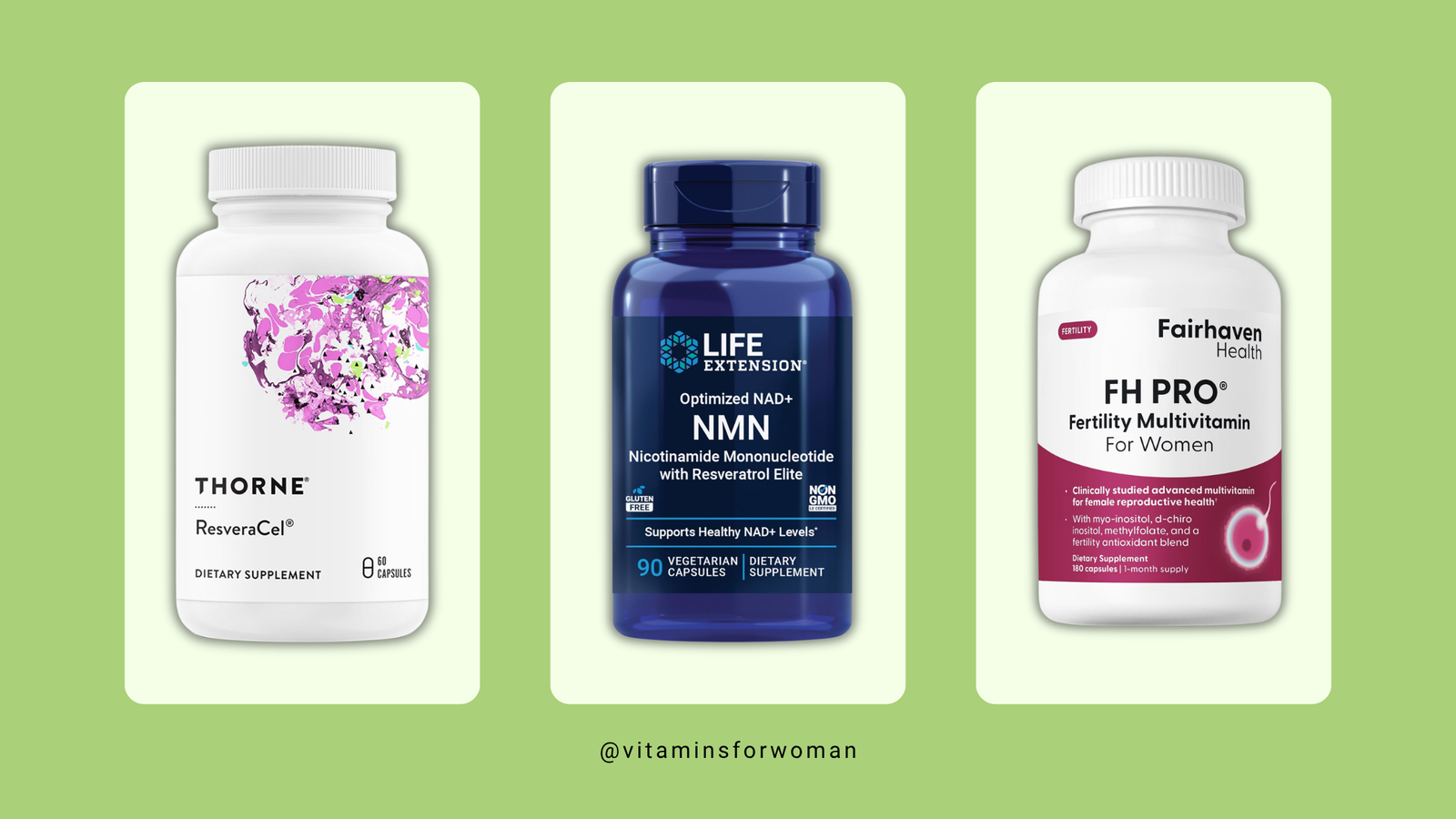
Third-party testing is non-negotiable given the lack of FDA premarket approval for supplements. Certifications from NSF International, USP, or Informed Sport indicate that what is on the label is actually in the bottle, and at the stated potency. For women who prefer a well-regarded brand with transparent sourcing, Thorn Research Resveratrol is a frequently recommended option. Life Extension Trans-Resveratrol is another well-established product that specifies the active isomer. Women who want resveratrol alongside CoQ10 in a single fertility-focused formula may find Fairhaven Health FH PRO for Women a convenient option, as it combines several antioxidants relevant to egg quality. For those building a broader preconception stack, Needed Prenatal Multi provides a methylated B-vitamin base that pairs well with standalone resveratrol.
Always discuss any new supplement with your reproductive endocrinologist or OB-GYN, particularly if you are undergoing assisted reproductive technology, have a chronic health condition, or are taking medications, since resveratrol can interact with blood thinners and certain other drugs.
Frequently Asked Questions
How long does it take for resveratrol to affect egg quality?
Egg development (folliculogenesis) takes approximately three months from primordial follicle recruitment to ovulation. Most researchers suggest taking resveratrol consistently for at least three months before expecting measurable changes in egg quality markers, making early and sustained supplementation important for anyone planning to conceive.
Can resveratrol be taken alongside a prenatal vitamin?
In most cases, yes. Resveratrol is not typically found in standard prenatal vitamins, so adding it as a separate supplement alongside a quality prenatal is a common approach. Always review your full supplement list with a healthcare provider to check for interactions or overlapping nutrients that could push totals above safe ranges.
What foods are naturally high in resveratrol?
Red grapes (especially the skin), red wine, blueberries, cranberries, peanuts, and Japanese knotweed are the richest dietary sources. Food amounts are generally much lower than the doses used in research, which is why supplementation is typically considered when therapeutic levels are the goal for reproductive support.
A Word From Vitamins For Woman
Understanding how resveratrol for egg quality and ovarian aging fits into your personal fertility picture is an empowering step, and we are glad you are here doing the research. The science is genuinely promising, though it is still evolving, and the most effective approach is always a personalized one built with your healthcare team. Pair targeted supplementation with sleep, nourishing food, stress management, and regular check-ins with a reproductive specialist for the strongest possible foundation.
References
- Liu M et al. (2018). Resveratrol protects against age-associated infertility in mice. Human Reproduction. PMID: 29309625. PubMed
- Takeo S et al. (2014). Resveratrol improves the mitochondrial function and fertilization outcome of bovine oocytes. Journal of Reproduction and Development. PMID: 24770625. PubMed
- Ben-Meir A et al. (2015). Coenzyme Q10 restores oocyte mitochondrial function and fertility during reproductive aging. Aging Cell. PMID: 25851607. PubMed
- Hussain T et al. (2016). Oxidative stress and inflammation: what polyphenols can do for us? Oxidative Medicine and Cellular Longevity. PMID: 27738491. PubMed
- Meng X et al. (2018). Dietary sources and bioactivities of melatonin. Nutrients. PMID: 29693023. PubMed