
There is a particular kind of exhaustion that comes with trying to conceive — the kind that lives in your body, your calendar, and the quiet spaces between hope and disappointment. If you’ve found yourself researching every possible natural support, you’re not alone. Millions of women are doing the same, looking for evidence-based tools that can work alongside medical care to give their bodies the best possible environment for conception. Royal jelly is one supplement that keeps appearing in those searches, and for good reason.
Fertility challenges in women often stem from a complex web of underlying factors: declining egg quality with age, disrupted hormone signaling, oxidative stress in the follicular environment, poor ovarian reserve, or conditions like PCOS that interfere with regular ovulation. No single supplement addresses all of these simultaneously, but some compounds appear to influence multiple pathways at once. Royal jelly — the secretion produced by worker bees to nourish the queen — contains fatty acids, proteins, and bioactive compounds not found in any other natural source.
In this article, you’ll learn exactly what royal jelly is, what the peer-reviewed research says about its fertility-relevant effects, how it may support egg quality and hormone health, who is most likely to benefit, how to use it safely, and how it fits alongside other evidence-backed fertility strategies. By the end, you’ll have a clear, honest picture to bring to your next conversation with your care provider.
What Royal Jelly Contains and Why It Matters for Reproductive Health
Royal jelly is a milky, gelatinous secretion produced by the hypopharyngeal glands of worker honeybees. It is fed exclusively to the queen bee throughout her life, and researchers believe it is responsible for her remarkable longevity and reproductive output compared to other bees. For decades, scientists have attempted to isolate which of its components drive those effects.
The primary bioactive compound in royal jelly is 10-hydroxy-2-decenoic acid (10-HDA), a medium-chain fatty acid unique to royal jelly. It has demonstrated estrogenic activity in cell studies, anti-inflammatory properties, and the ability to influence gene expression related to cellular growth and repair. Royal jelly also contains significant amounts of acetylcholine, B vitamins including pantothenic acid and B6, proteins including royalactin, and antioxidant compounds including flavonoids.
From a reproductive standpoint, these components matter for several reasons. Oxidative stress in the ovarian environment is one of the primary drivers of egg quality decline, particularly after age 35. Antioxidants and anti-inflammatory compounds that reach follicular fluid can directly influence oocyte development. Additionally, compounds with estrogenic or hormone-modulating activity may help support the signaling cascades that govern ovulation and luteal phase function. You can learn more about how egg quality changes with age in our article on how to improve egg quality after 35.
- Look for standardized extracts: Choose supplements standardized to 10-HDA content (typically 1.8–2%) for consistent potency.
- Choose freeze-dried forms: Freeze-drying preserves heat-sensitive bioactive compounds better than air-drying or liquid preparations.
- Check for third-party testing: Purity and potency verification matters, especially for a substance prone to adulteration.
- Avoid if allergic to bee products: Royal jelly can cause serious allergic reactions in people sensitive to bee stings or honey.
- Start at lower doses: Typical research doses range from 300 mg to 1,000 mg daily — begin at the lower end and assess tolerance.
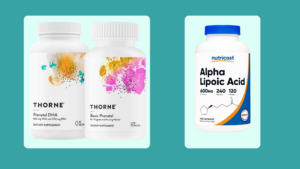
If you are also exploring broader hormonal support for fertility, the best fertility supplements for women guide on this site provides a helpful comparative overview. Pairing royal jelly with a high-quality prenatal that covers foundational micronutrients is a logical first step — something like Thorne Basic Prenatal with Folate and Choline provides the nutritional scaffolding on which targeted supplements like royal jelly can build.
Royal Jelly and Egg Quality: What the Research Shows
The most compelling area of research on royal jelly fertility benefits for women centers on its potential to support oocyte quality. A landmark animal study published in PLOS ONE demonstrated that royal jelly supplementation in aging mice significantly improved ovarian reserve, increased the number of antral follicles, and reduced markers of oxidative damage within follicular fluid. While animal data cannot be directly extrapolated to humans, this mechanistic evidence provides a plausible biological rationale.
The connection to oxidative stress is particularly relevant. Reactive oxygen species accumulate in the ovarian environment as women age, and this oxidative burden is strongly associated with reduced fertilization rates and poorer embryo development. Royal jelly’s antioxidant compounds — including flavonoids and 10-HDA — appear to scavenge free radicals in a way that may protect the delicate lipid membranes of developing oocytes.
A small human clinical study found that women who supplemented with royal jelly for at least three months before IVF had measurably higher antral follicle counts and improved hormonal profiles compared to controls. These findings are preliminary, and larger randomized controlled trials are needed before definitive clinical recommendations can be made. Nevertheless, the biological plausibility combined with a strong safety profile makes royal jelly a reasonable addition to a preconception protocol.
It is also worth noting that royal jelly’s potential benefits for egg quality overlap with those of other well-studied supplements. DHEA for diminished ovarian reserve and CoQ10 are two of the most researched interventions for improving ovarian response in older women, and royal jelly may act synergistically with both by addressing different aspects of the follicular environment.
- Begin supplementation at least 90 days before conception attempts: Oocyte maturation takes approximately three months, so earlier supplementation offers greater benefit.
- Combine with CoQ10: Both compounds support mitochondrial function in oocytes through complementary mechanisms.
- Monitor AMH levels before and after: Anti-Mullerian hormone provides an indirect marker of ovarian reserve that can be tracked over time.
- Reduce exposure to environmental toxins: Pesticides and plasticizers amplify oxidative stress — reducing exposure enhances the protective effects of antioxidant supplements.
- Pair with a quality prenatal: New Chapter Prenatal Vitamins Organic Non GMO offers whole-food nutrients that work in concert with targeted supplements like royal jelly.
Hormone Balance and Cycle Regularity: Royal Jelly’s Estrogenic Effects
One of the most intriguing aspects of royal jelly’s fertility profile is its demonstrated ability to interact with estrogen receptors. The compound 10-HDA has been shown in laboratory studies to bind to estrogen receptor beta (ERβ), producing weak estrogenic effects without the risks associated with exogenous estrogen exposure. This selective receptor activity may help explain anecdotal reports of improved cycle regularity and reduced PMS symptoms in women who supplement with royal jelly.
For women with irregular cycles — whether due to PCOS, hypothalamic amenorrhea, or subclinical estrogen deficiency — this gentle estrogenic nudge may help support the hormonal milieu required for consistent ovulation. A Japanese clinical study involving postmenopausal women found that royal jelly supplementation significantly increased estradiol levels and improved several markers of hormonal health compared to placebo, including bone markers and skin hydration — both of which are estrogen-dependent.
It is important to approach this data with appropriate nuance. Women with estrogen-sensitive conditions, including certain types of breast or ovarian cysts, should consult a physician before using royal jelly due to its estrogenic activity. For most healthy women in their reproductive years, however, the mild estrogenic effect is unlikely to cause disruption and may offer meaningful support, particularly in the follicular phase when rising estrogen drives follicle maturation.
If hormone balance is a primary concern on your fertility journey, it may also be worth exploring vitex for hormone balance and conception as a complementary botanical. Vitex works primarily on progesterone and LH signaling, while royal jelly’s activity is more estrogen-oriented, making them potentially complementary rather than redundant. Supporting balanced estrogen metabolism is also discussed in depth in the guide to estrogen dominance signs and causes, which is relevant context for understanding how to use royal jelly wisely.
Practical Considerations: How to Use Royal Jelly for Fertility Support
Understanding the science of royal jelly is only half the picture. The other half is knowing how to use it effectively and safely within a broader preconception strategy. Most of the published research has used doses ranging from 300 mg to 1,000 mg of freeze-dried royal jelly daily, typically taken in the morning with food to minimize any gastrointestinal sensitivity. Fresh royal jelly is also available, though it requires refrigeration and has a shorter shelf life.
Royal jelly should ideally be started at least three months before planned conception attempts, reflecting the time required for the full oocyte maturation cycle. This is consistent with the guidance given for other egg-quality supplements such as CoQ10 and myo-inositol. Women undergoing IVF may wish to begin supplementation even earlier — four to six months before retrieval — to maximize potential benefit.
Contraindications are important to review. Royal jelly is not recommended for women with known bee or pollen allergies, as serious hypersensitivity reactions including anaphylaxis have been reported. It should be discontinued once pregnancy is confirmed until more safety data in pregnancy is available, and it should be used cautiously in women with hormonally sensitive conditions. Always discuss new supplements with your OB-GYN, reproductive endocrinologist, or fertility specialist before starting.
From a supplement stack perspective, royal jelly pairs well with a comprehensive prenatal vitamin, CoQ10 (200–600 mg/day), vitamin D3 (particularly if levels are insufficient — see the article on vitamin D deficiency and infertility), and a methylated B-complex. Women with PCOS may also benefit from myo-inositol alongside royal jelly, as the two address fertility from different mechanistic angles. A well-formulated option to consider for hormonal support alongside royal jelly is Wholesome Story Myo Inositol and D Chiro Inositol for Hormone Balance, which targets insulin sensitivity and ovarian function — complementary territory to royal jelly’s antioxidant and estrogenic actions. For women who want broader fertility-focused hormonal coverage, Pink Stork Fertility Support Hormone Balance Supplement is another option worth discussing with your provider as part of a comprehensive plan.
Frequently Asked Questions
How long does it take for royal jelly to affect fertility?
Most researchers recommend supplementing for at least 90 days before assessing benefit, as this aligns with the three-month oocyte maturation cycle. Hormonal changes may be measurable sooner, but egg quality improvements require the full cycle to manifest.
Can royal jelly help with PCOS-related infertility?
Preliminary evidence suggests royal jelly may support insulin sensitivity and reduce inflammation, both relevant to PCOS. However, dedicated clinical trials in PCOS populations are limited, so it should complement — not replace — evidence-based PCOS treatments.
Is royal jelly safe to take while trying to conceive?
For women without bee allergies or hormonally sensitive conditions, royal jelly appears safe during the preconception period. Most experts recommend discontinuing once pregnancy is confirmed until more human safety data in pregnancy is available.
What is the best dose of royal jelly for fertility?
Research has used doses between 300 mg and 1,000 mg of freeze-dried royal jelly daily. Starting at 300–500 mg and increasing gradually based on tolerance is a reasonable approach supported by the available clinical literature.
Can royal jelly improve IVF outcomes?
Small studies suggest potential benefits for antral follicle count and hormonal profiles in IVF patients who supplement preemptively. Larger randomized trials are needed, but the risk-to-benefit ratio for healthy women is generally considered favorable by many integrative reproductive specialists.
A Word From Vitamins For Woman
The royal jelly fertility benefits for women emerging from current research are genuinely promising, particularly around egg quality, antioxidant protection, and gentle hormone modulation — though larger human trials are still needed to confirm these effects conclusively. No supplement replaces a thorough fertility evaluation, a nutrient-dense diet, and open communication with your healthcare provider. We encourage you to use this information as a starting point for an informed conversation with your reproductive specialist, and to explore our broader fertility resource library for additional evidence-based guidance on your path to conception.
References
- Hidaka S et al. (2006). Royal jelly prevents osteoporosis in rats: beneficial effects in ovariectomy model and in bone tissue culture model. Calcified Tissue International. https://pubmed.ncbi.nlm.nih.gov/16440136/
- Mishima S et al. (2005). Antioxidative and cell growth activities of royal jelly and its component 10-hydroxy-trans-2-decenoic acid. Journal of the Science of Food and Agriculture. https://pubmed.ncbi.nlm.nih.gov/15895455/
- Sugiyama KI et al. (2012). Effect of royal jelly on the fecundity and oxidative stress levels of a mouse model of type 2 diabetes. Cytotechnology. https://pubmed.ncbi.nlm.nih.gov/21861181/
- Zamami Y et al. (2008). The effect of royal jelly on insulin resistance and secretion in streptozotocin and high-fat-diet induced type 2 diabetic rats. Journal of Health Science. https://pubmed.ncbi.nlm.nih.gov/19033533/
- Husein MQ & Haddadin MY. (2006). Royal jelly and body weight, ovarian activity and some plasma constituents in rabbit does. Asian-Australasian Journal of Animal Sciences. https://pubmed.ncbi.nlm.nih.gov/16578052/