If you are actively trying to conceive, building a thoughtful fertility supplement stack for trying to conceive is one of the most proactive steps you can take. The right combination of nutrients can support egg quality, hormone balance, and the uterine environment long before a positive test appears, giving your body the best possible foundation.
There is something quietly exhausting about the two-week wait, the charting, the hoping. Many women describe a deep wish to feel like they are doing something, anything, that moves the needle. That longing is completely valid, and it is also a reminder that nutrition and supplementation are tools that genuinely belong in the conversation, not just as comfort, but as evidence-backed support for reproductive health.
Nutrient gaps are more common than most women realise during the preconception window. Oxidative stress, which accelerates egg DNA damage, is another under-discussed root cause that targeted antioxidants can help address. Hormone signalling itself depends on micronutrients like zinc, B6, and iodine that a standard diet does not always deliver reliably.
Below you will find four evidence-informed sections covering the non-negotiable foundation nutrients, targeted add-ons for egg quality, timing and lifestyle considerations, and how to layer your stack safely.
The Core Nutrients for Every TTC Stack
Before adding specialised extras, a solid preconception foundation covers the nutrients most directly linked to ovulation, early fetal development, and maternal health. Think of this layer as the base of a pyramid: everything else sits on top of it.
Folate is the starting point. The Centre for Disease Control and Prevention (CDC) confirmed that adequate folate status before conception significantly reduces the risk of neural tube defects and supports healthy cell division from the earliest days. Importantly, women with the MTHFR gene variant convert synthetic folic acid poorly, making methylfolate the preferred form. For a full breakdown, see our guide on folate vs folic acid when trying to conceive.
Vitamin D is equally foundational. Receptors for this nutrient exist throughout the reproductive system, including in the ovaries and endometrium, and low levels have been associated with reduced implantation rates in observational studies. Iodine is another critical inclusion: it supports thyroid hormone production, which governs menstrual regularity and early embryo development.
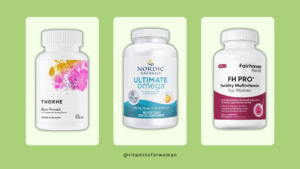
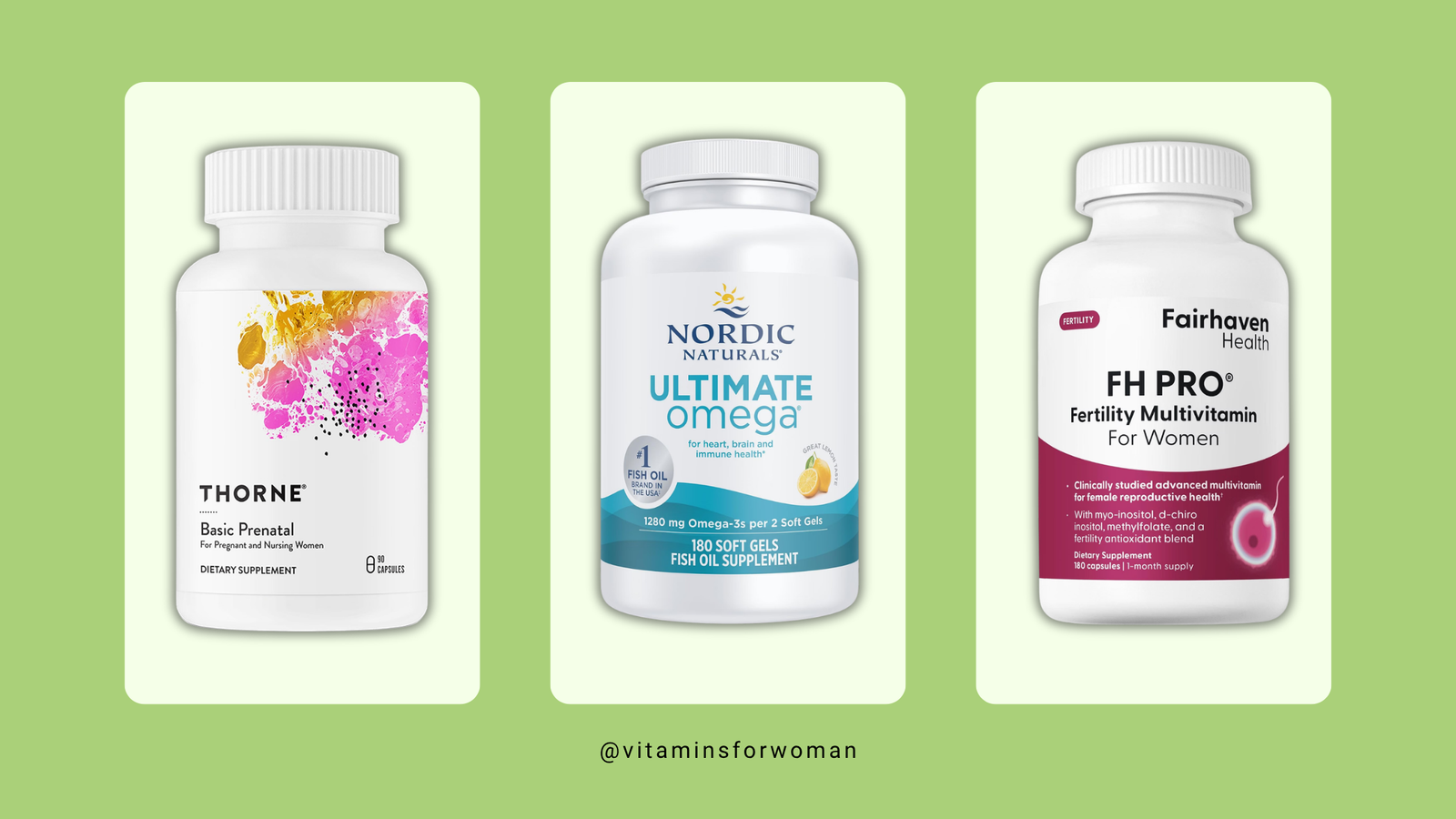
Iron deserves attention too, particularly for women with heavier periods or plant-based diets. Thorne Basic Prenatal is widely recommended by integrative practitioners because it contains methylfolate, iron bisglycinate (a gentler form), iodine, and vitamin D3 in a single capsule, covering most of this foundational layer in one product.
- Choose methylfolate over folic acid if you have MTHFR variants or are unsure of your status.
- Ask your doctor to test 25-OH vitamin D so you can supplement to a therapeutic level rather than guessing.
- Include iodine, especially if you avoid iodised salt or dairy products.
- Look for iron bisglycinate or iron glycinate rather than ferrous sulfate to reduce GI side effects.
- Start this foundational layer at least three months before actively trying, as egg maturation takes roughly that long.
Targeted Add-Ons: Egg Quality, Mitochondria, and Antioxidant Support
Once the foundation is in place, a well-designed fertility supplement stack for trying to conceive adds targeted nutrients that address the specific biological processes most vulnerable to age, stress, and environmental toxins. Egg quality is the most frequent concern for women over 35, and for good reason: each egg is entirely dependent on its own mitochondria for the energy needed during fertilisation and early division.
Coenzyme Q10 (CoQ10) in its ubiquinol form is the most researched mitochondrial support nutrient for female fertility. A 2018 trial published in the Journal of Assisted Reproduction and Genetics found that CoQ10 supplementation was associated with improved ovarian response in women with poor prognosis undergoing IVF. Even for women conceiving naturally, CoQ10 supports the cellular energy production that underpins healthy egg development. Our dedicated article on the best CoQ10 supplements for fertility covers dosing considerations in more detail. Qunol Ultra CoQ10 is a popular water and fat-soluble formula that features in many TTC supplement discussions for its absorption profile.
N-acetyl cysteine (NAC) is another antioxidant showing promise, particularly for women with PCOS. It replenishes glutathione, the body’s master antioxidant, and has been studied in the context of ovulation induction. Omega-3 fatty acids, found in high-quality fish oil, support anti-inflammatory prostaglandin pathways that influence ovulation and implantation. Nordic Naturals Ultimate Omega is a well-regarded option with third-party purity testing. Finally, alpha-lipoic acid has shown preliminary benefit for mitochondrial support in aging eggs, though more robust human trials are still needed.
- Prioritise ubiquinol over standard ubiquinone CoQ10 for potentially superior absorption, especially over age 35.
- Add a quality omega-3 (EPA plus DHA) to support endometrial receptivity and reduce systemic inflammation.
- Consider NAC if you have PCOS or elevated oxidative stress markers.
- Antioxidant nutrients work synergistically, so combining vitamin C, vitamin E, and CoQ10 may offer additive benefit.
- Discuss any add-ons with your doctor or pharmacist before layering them onto a prenatal.
Timing, Cycle-Syncing, and Lifestyle Factors That Amplify Your Stack
The most evidence-based supplement stack in the world will underperform if the surrounding lifestyle erodes the same pathways the nutrients are trying to support. Timing and consistency matter as much as ingredient selection.
The three-month rule is more than a slogan. Because the full cycle of egg development (called folliculogenesis) takes approximately 90 days, supplementation started at least three months before trying gives nutrients time to accumulate in follicular fluid and influence the egg that will eventually be released. This is why our article on how to prepare your body for pregnancy in 3 months recommends beginning the preconception stack well before the first cycle of trying.
Sleep is a non-negotiable amplifier. Melatonin is produced in follicular fluid and acts as a potent local antioxidant protecting eggs from oxidative damage during ovulation. Poor sleep suppresses melatonin and elevates cortisol, which can disrupt the LH surge that triggers ovulation. Managing stress through evidence-supported adaptogens such as ashwagandha may be worth discussing with a healthcare provider, particularly for women whose cycles become irregular during high-stress periods.
Blood sugar stability is another underappreciated variable. Insulin resistance, even at subclinical levels, elevates androgens and can impair ovulation in women with or without a formal PCOS diagnosis. A lower glycaemic diet, alongside nutrients like inositol (myo-inositol and D-chiro-inositol), has been studied for improving insulin sensitivity and cycle regularity. Avoiding alcohol, minimising processed food, and choosing organic produce where possible (particularly for the “dirty dozen” high-pesticide fruits and vegetables) reduce the xenoestrogen burden on the reproductive system.
Layering Safely: Avoiding Overlap, Toxicity, and Common Mistakes
Building a fertility supplement stack for trying to conceive is genuinely exciting, but more is not always better. Fat-soluble vitamins, particularly vitamin A, vitamin D, and vitamin E, can accumulate to problematic levels if you are taking a prenatal plus multiple individual supplements without checking for overlap. Pre-formed vitamin A (retinol) above recommended preconception levels carries teratogenic risk, so it is essential to account for every source across your full stack.
The simplest safeguard is to start with a high-quality comprehensive prenatal and build add-ons only for nutrients that your prenatal does not adequately cover. Ritual Essential Prenatal uses a delayed-release capsule with traceable ingredients and includes methylfolate, omega-3 DHA, iron, and vitamin D3, making it a transparent starting base. From there, CoQ10 and omega-3 (if not in the prenatal) are the most commonly warranted additions without significant overlap risk.
Lab testing before supplementing is the gold standard. A simple panel covering vitamin D, ferritin, B12, thyroid function (TSH and free T4), and a full blood count can reveal genuine gaps and prevent unnecessary supplementation. Women who have been on hormonal contraception for extended periods may have depleted B6, B12, zinc, and magnesium, making targeted repletion more important than a generic stack. For women with specific diagnoses such as low AMH or diminished ovarian reserve, additional targeted support may be warranted, and our article on low AMH and natural supplement support explores those options in depth.
Frequently Asked Questions
How long before trying to conceive should I start a fertility supplement stack?
Most fertility-focused practitioners recommend starting at least three months before actively trying. Egg development takes approximately 90 days, so beginning early allows nutrients to accumulate in follicular fluid and support the quality of the egg that will actually be released during your target cycle.
Can I take all these supplements alongside a prenatal vitamin without risking toxicity?
It depends on which supplements you are adding. CoQ10 and omega-3s carry a low overlap risk with most prenatals. Fat-soluble vitamins like A, D, E, and K can overlap, so always compare labels and consult a pharmacist or doctor before combining multiple products.
Is CoQ10 really worth taking for egg quality, or is the evidence too preliminary?
The evidence is encouraging but still developing. Several small trials, including IVF-focused studies, have shown improved ovarian response with CoQ10 supplementation. It is generally well-tolerated and widely used in reproductive medicine, but it should not be viewed as a guaranteed fix or replacement for medical evaluation.
Do I need a separate omega-3 supplement if my prenatal already contains DHA?
Check the amount of DHA in your prenatal first. Many prenatals contain a modest amount of DHA. If your prenatal already provides an adequate combined EPA and DHA level from a quality source, an additional fish oil supplement may not be necessary. Your healthcare provider can advise based on your diet and labwork.
Are there any supplements I should stop taking once I get a positive pregnancy test?
Yes. Some botanicals and high-dose individual supplements are not recommended in confirmed pregnancy. Herbs such as ashwagandha and vitex, for example, should be discussed with your midwife or OB before continuing. Always review your full stack with a qualified provider as soon as you receive a positive result.
A Word From Vitamins For Woman
Building a fertility supplement stack for trying to conceive is a meaningful act of self-care, and you deserve guidance rooted in real evidence rather than marketing claims. Every woman’s reproductive picture is unique, shaped by age, health history, genetics, and lifestyle, so what works beautifully for one person may need adjusting for another.
References
- Gaskins AJ et al. (2022). Diet and fertility: a review. American Journal of Obstetrics and Gynecology. PMID: 34644566. PubMed
- Ben-Meir A et al. (2015). Coenzyme Q10 restores oocyte mitochondrial function and fertility during reproductive aging. Aging Cell. PMID: 25754370. PubMed
- Gizak M et al. (2021). Folate and folic acid in the periconceptional period: recommendations vs. reality. Nutrients. PMID: 33803453. PubMed
- Paffoni A et al. (2014). Vitamin D deficiency and infertility: insights from in vitro fertilization cycles. Journal of Clinical Endocrinology and Metabolism. PMID: 25029426. PubMed
- Xu Y et al. (2018). Pretreatment with coenzyme Q10 improves ovarian response and embryo quality in low-prognosis young women with decreased ovarian reserve: a randomized controlled trial. Reproductive Biology and Endocrinology. PMID: 29587871. PubMed