If your period arrives late one month, skips the next, and brings unwelcome surprises in between, you are not alone, and you are not broken. The right supplements for irregular cycles and fertility can work alongside a healthy lifestyle to help your body find its rhythm again, whether you are actively trying to conceive or simply want to feel better in your own skin.
Living with an unpredictable cycle can feel isolating. You may track, wait, and wonder every month, wondering whether your body is working the way it should. That emotional weight is real, and it deserves to be taken seriously. Many women spend years assuming their irregular cycles are just the way they are, when in fact underlying nutrient gaps or hormonal imbalances are quietly driving the disruption.
Irregular cycles can stem from a wide range of root causes, including polycystic ovary syndrome (PCOS), thyroid dysfunction, low body weight, chronic stress, insulin resistance, and deficiencies in key nutrients such as vitamin D, magnesium, zinc, and B vitamins. Because cycles are so sensitive to internal chemistry, even modest nutritional shifts can produce meaningful changes in cycle length, ovulation frequency, and fertility markers.
In this guide, you will find four focused sections covering the nutrients and botanicals with the strongest research support, practical tips for choosing and using these supplements wisely, an honest look at lifestyle factors that amplify their effects, and guidance on when to loop in a healthcare provider.
Key Nutrients That Support Cycle Regularity and Ovulation
Before reaching for a supplement, it helps to understand which nutrients are most directly involved in the hormonal cascade that drives a healthy menstrual cycle. Ovulation depends on a finely tuned interplay of follicle-stimulating hormone, luteinizing hormone, estrogen, and progesterone. Several micronutrients act as essential cofactors in this system.
Vitamin D is perhaps the most widely studied. Vitamin D receptors are found throughout the ovaries and uterus, and a 2019 review reported that women with PCOS who had low vitamin D levels showed more pronounced cycle irregularities compared to those with adequate levels. Correcting deficiency appears to support more regular ovulation in some women. Thorne Vitamin D-5000 is a well-regarded option that delivers vitamin D3 in a clean, bioavailable form.
Magnesium supports the hypothalamic-pituitary-ovarian axis and helps modulate cortisol, a hormone that can suppress ovulation when chronically elevated. A study in the European Journal of Clinical Nutrition found that magnesium intake was positively associated with lower levels of sex hormone-binding globulin, which in turn allows more free estrogen and testosterone to be available for normal hormonal signaling. You can read more about magnesium for ovulation and cycle health here.
Zinc plays a role in follicle development and the production of progesterone after ovulation. Low zinc has been linked to delayed ovulation and shortened luteal phases in some observational studies.
- Prioritize vitamin D testing before supplementing, so your dose is appropriate for your actual level.
- Choose magnesium glycinate or magnesium bisglycinate for better absorption and less digestive upset.
- Pair zinc with a small amount of food to reduce nausea.
- Look for supplements that are third-party tested, such as NSF Certified for Sport or USP verified.
- Consider a comprehensive panel including ferritin, B12, and thyroid markers before starting a new protocol.
Botanicals and Specialty Supplements With Fertility Evidence
Beyond foundational micronutrients, several botanical and specialty supplements have accumulated a meaningful body of clinical evidence for supporting cycle regularity and fertility in women.
Vitex agnus-castus (chaste tree berry) is one of the most studied herbs for menstrual irregularity. It acts on dopamine receptors in the pituitary gland, which in turn helps normalize prolactin and supports a healthy luteal phase. A placebo-controlled trial found that women with cycle irregularities who used a Vitex-containing preparation had significantly more menstrual cycles within the normal range over three months compared to placebo.
Myo-inositol has strong evidence particularly for women with PCOS-related cycle disruption. It improves insulin sensitivity in ovarian tissue and has been shown in multiple randomized controlled trials to restore spontaneous ovulation in women with PCOS.
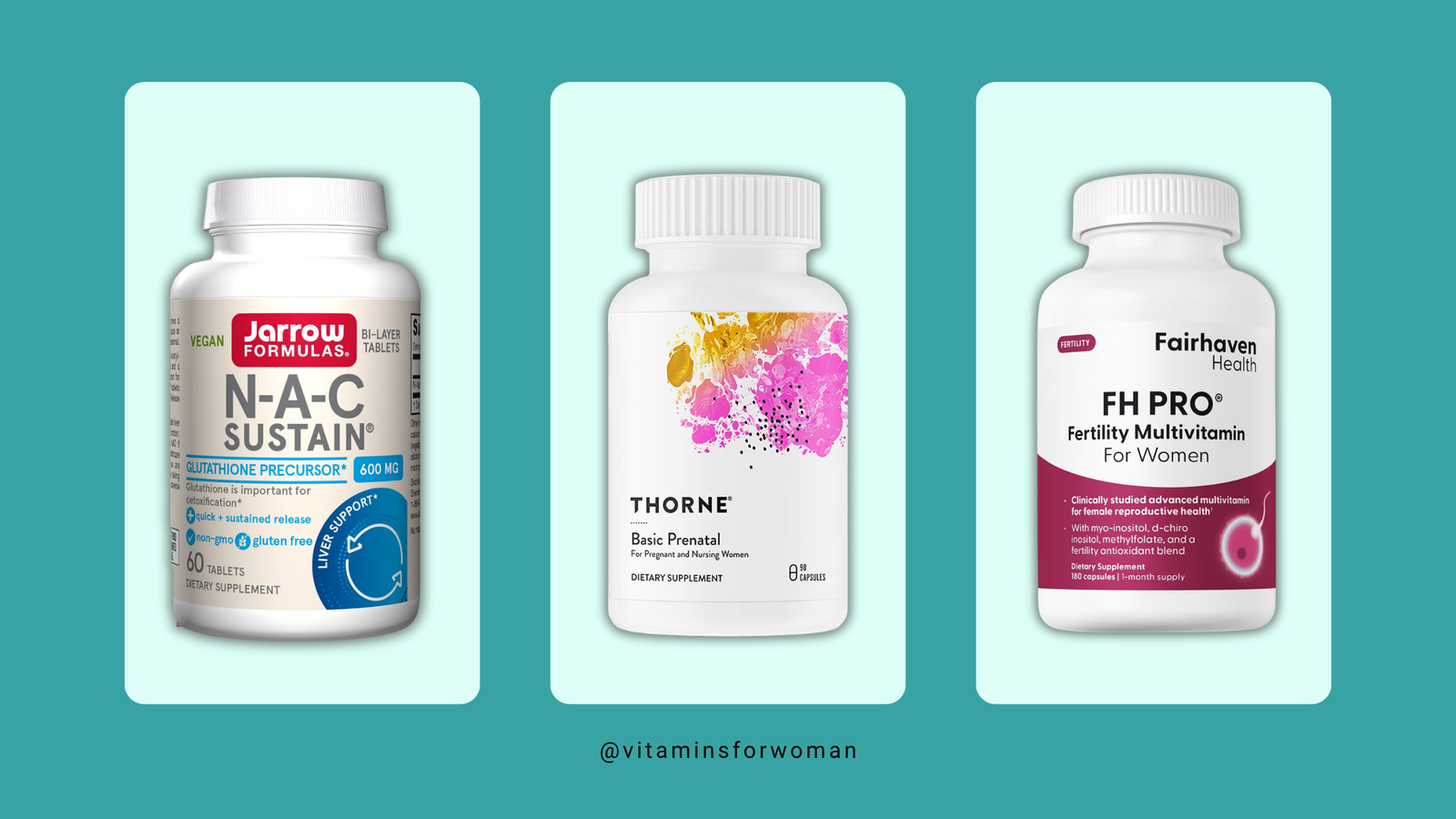
N-acetyl cysteine (NAC) is an antioxidant precursor to glutathione that has shown promise for reducing androgen levels and improving ovulation rates in women with PCOS, as explored in our page on N-acetyl cysteine for PCOS and fertility. Jarrow Formulas N-A-C Sustain offers a sustained-release NAC formulation that is widely available. Fairhaven Health FH PRO Fertility Multivitamin for Women combines Vitex, folate, and other fertility-relevant nutrients in one capsule.
- Allow at least two to three full menstrual cycles before assessing whether a botanical is working.
- Do not combine Vitex with hormonal contraceptives or fertility medications without medical guidance.
- Look for myo-inositol products that also include D-chiro-inositol in a physiological ratio.
- NAC is best taken away from meals for maximum antioxidant absorption.
- Inform your OB-GYN or reproductive endocrinologist about any botanical supplements you are using.
The Role of Folate, B Vitamins, and Antioxidants in Reproductive Health
A healthy cycle is not just about ovulation timing. It also depends on the quality of the eggs being matured each month and on adequate nutritional support for implantation and early pregnancy should conception occur. This is where folate, B vitamins, and antioxidants become critically important.
Folate, particularly in its active methylated form (5-methyltetrahydrofolate, or 5-MTHF), is essential for DNA synthesis and cell division in developing follicles. Women with the MTHFR gene variant, which is relatively common, may not convert synthetic folic acid efficiently, making methylated folate a smarter default choice. Our article on folate versus folic acid when trying to conceive covers this distinction in depth.
Vitamin B6 supports progesterone production during the luteal phase and has been used traditionally to address premenstrual syndrome and luteal phase deficiency. A consistent body of observational research links adequate B6 intake to a reduced risk of early pregnancy loss, though large randomized trials are still limited. Vitamin B12 is equally important for cycle health, particularly in women following plant-based diets where deficiency risk is higher.
Coenzyme Q10 (CoQ10) is an antioxidant that supports mitochondrial energy production in egg cells. Egg quality declines with age partly because mitochondrial function diminishes, and CoQ10 supplementation has been studied as a way to slow this process. A 2020 trial found improvements in ovarian response and embryo quality in women who supplemented with CoQ10 before an IVF cycle. Thorne Basic Prenatal provides methylfolate, active B12, and other key nutrients in one well-formulated capsule, making it a convenient starting point for women trying to conceive.
Lifestyle Factors That Amplify the Benefits of Supplementation
No supplement works in isolation. The research on cycle regularity consistently shows that nutritional interventions produce the strongest results when they are paired with meaningful lifestyle changes. Understanding what drives your cycle disruption in the first place is the most empowering step you can take.
Chronic psychological stress is one of the most underappreciated drivers of irregular cycles. Elevated cortisol directly suppresses gonadotropin-releasing hormone (GnRH) from the hypothalamus, which can delay or prevent ovulation entirely. Adaptogenic herbs such as ashwagandha have been studied for their ability to lower cortisol and reduce stress-related hormonal disruption. Our page on ashwagandha and female fertility examines the clinical evidence in detail. Beyond adaptogens, consistent sleep of seven to nine hours per night, regular moderate exercise, and mindfulness practices each independently support healthier cortisol rhythms.
Blood sugar regulation deserves special attention for women with PCOS or suspected insulin resistance. Diets high in refined carbohydrates can elevate insulin, which in turn stimulates the ovaries to produce excess androgens and disrupts ovulation. A whole-food dietary pattern emphasizing fiber, lean protein, healthy fats, and low-glycemic carbohydrates provides a hormonal environment in which supplements can work far more effectively. Berberine, a plant-derived compound, has shown insulin-sensitizing properties comparable in some studies to metformin, though it should only be used under supervision, especially in women who are pregnant or trying to conceive.
Body weight at both extremes matters as well. Both significant underweight and obesity are associated with anovulatory cycles. Even modest intentional weight normalization, moving toward a weight that supports hypothalamic function, can restore regular ovulation without any supplementation at all in some women. Working with a registered dietitian who specializes in reproductive health is a valuable investment if weight is a factor in your cycle irregularity.
Frequently Asked Questions
Is it safe to take fertility supplements if I am not yet trying to conceive?
Most foundational supplements such as vitamin D, magnesium, methylfolate, and zinc are safe for general use and support overall hormonal health regardless of conception timing. Botanicals like Vitex are typically used for specific cycle concerns and are best taken with professional guidance rather than long-term without review.
Do supplements help if my irregular cycles are caused by thyroid issues?
Thyroid dysfunction is a primary driver of cycle irregularity and should be diagnosed and managed medically before relying on supplements alone. Nutrients such as selenium, iodine, and zinc support thyroid function and may complement medical treatment, but they are not a substitute for thyroid hormone therapy when it is clinically indicated.
Should I stop taking fertility supplements once I become pregnant?
Some supplements used for cycle regularity, such as Vitex, are generally discontinued once pregnancy is confirmed, while others such as methylfolate, vitamin D, and omega-3s are recommended throughout pregnancy. Always review your supplement protocol with your OB-GYN as soon as you have a positive test to ensure what you are taking is appropriate for early pregnancy.
A Word From Vitamins For Woman
Your cycle is one of the most reliable windows into your overall hormonal health, and when it becomes unpredictable, your body is asking for attention and care. The supplements covered in this guide, from vitamin D and magnesium to Vitex and myo-inositol, each have meaningful research behind them, but they work best as part of a broader commitment to nourishing your body well.
References
- Fatemi Zadeh S et al. (2019). Vitamin D status and its relationship with metabolic and hormonal parameters in women with polycystic ovary syndrome. Nutrients. PMID: 31319633. PubMed
- Qu F et al. (2017). Association of changes in dietary patterns and serum magnesium concentrations with sex hormone-binding globulin. European Journal of Clinical Nutrition. PMID: 27901037. PubMed
- Arentz S et al. (2017). Herbal medicine for the management of polycystic ovary syndrome (PCOS) and associated oligo/amenorrhoea and hyperandrogenism. Journal of Alternative and Complementary Medicine. PMID: 25591441. PubMed
- Unfer V et al. (2020). Myo-inositol effects in women with PCOS: a meta-analysis of randomized controlled trials. Frontiers in Endocrinology. PMID: 32038498. PubMed
- Xu Y et al. (2020). Pretreatment with coenzyme Q10 improves ovarian response and embryo quality in low-prognosis young women with decreased ovarian reserve. Reproductive Biology and Endocrinology. PMID: 31900139. PubMed